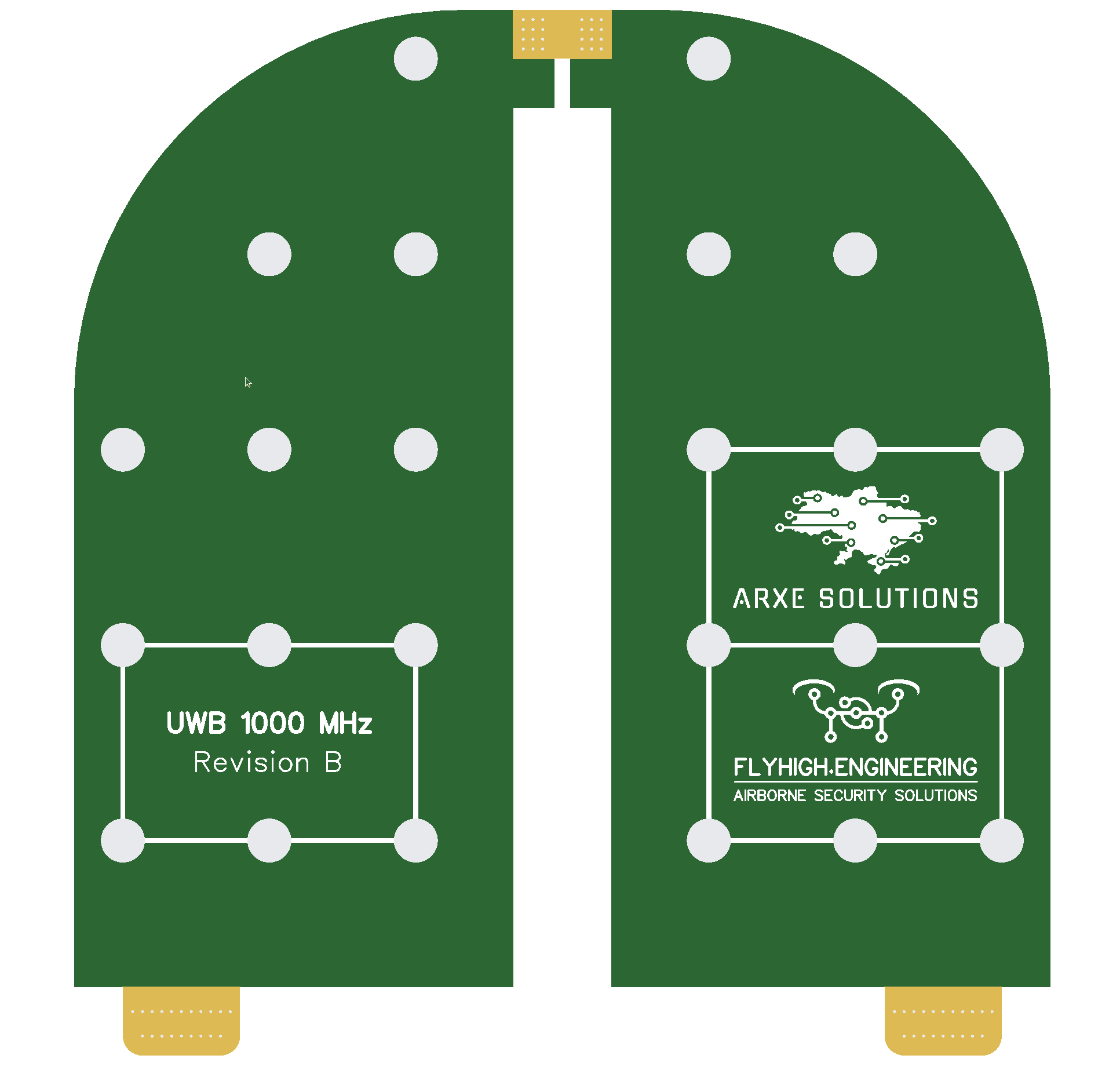
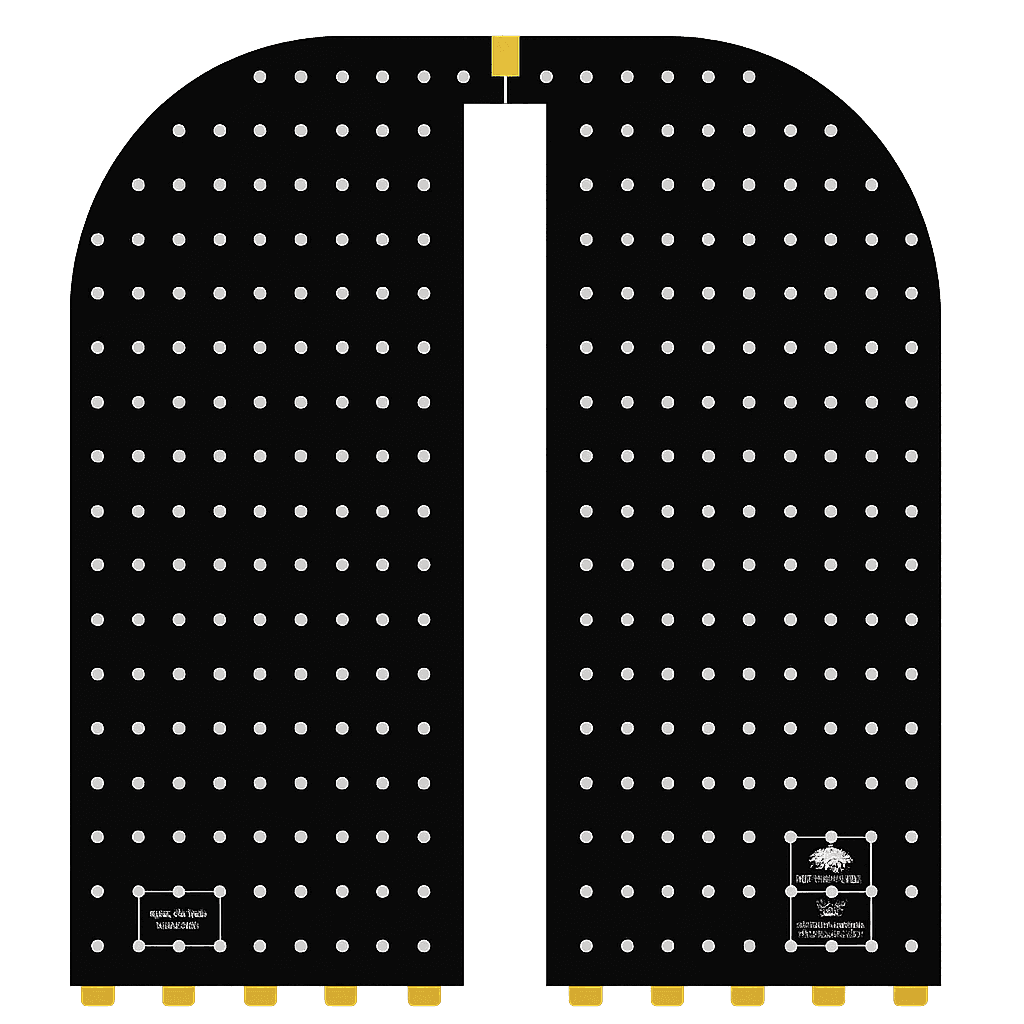
Broadband Omni disc antenna 800 MHz – 8 GHz, Linear, N-type
Omnidirectional disc antenna 800 MHz – 8 GHz with the highest gain in the range — 11 dBi at 5800 MHz. N-type Female connector, 500 W input power, 360 g. The working antenna of an FPV ground station.
Specifications
| RF | |
|---|---|
| Frequency range | 800–8000MHz |
| Antenna type | Omnidirectional |
| Polarization | Linear |
| Max gain | 11.0 dBi @ 5800 MHz |
| Impedance | 50Ω |
| Max input power | 500W |
| Connector | N-type Female |
| Dimensions | 210 × 210 × 180mm |
| Weight | 360g |
Description
The 800 MHz – 8 GHz disc antenna is the one that goes on a ground station. It has the highest gain in the range on the working FPV band: 11 dBi at 5800 MHz against 8.8 dBi on the compact model. With an omnidirectional pattern every decibel is range you do not have to win back by aiming.
360 degrees, no aiming
An omnidirectional pattern means the station does not lose the aircraft when it passes behind the operator or changes heading. A directional antenna gives more gain, but only inside its sector — and needs someone or something to turn it. Here there is none of that: set it up once.
N-type and 500 W
The N-type Female connector is the standard for fixed chains: mechanically stronger than SMA, better against moisture and lower loss at high frequencies. Together with a 500 W rating it means the antenna can sit in a transmit chain, not just on receive, without watching the margin.
What those 200 MHz at the bottom add
Against the model that starts at 1 GHz, this one works from 800 MHz, and that difference holds 868 MHz ISM — telemetry, LoRa, sensors — plus the lower mobile channels. The price is size: 210 × 210 × 180 mm and 360 grams against 120 × 120 × 100 mm and 100 grams.
- 868 MHz ISM — telemetry, LoRa, sensors
- 900 MHz and the lower mobile bands
- 1.2 and 1.3 GHz — FPV channels
- 2.4 GHz — control links, telemetry, Wi-Fi
- 5.2 and 5.8 GHz — the main FPV band, where gain peaks
Which of the three disc antennas is yours
This is the compromise that wins most often: ground-station gain at a weight you can still work with. Need lighter and smaller? The 1–8 GHz disc antenna weighs 100 g. Need 433 MHz, PMR or DVB-T? Only the 300 MHz – 8 GHz disc antenna covers those — twice the price and a kilogram.
Built to order. Send us the quantity and we will agree the lead time and price the batch.
Buying in volume? The price changes
Volume pricing is worked out against your quantity. Tell us how many units you need and we will come back with a calculation within one business day.
- Pricing scales with volume
- Delivery across Ukraine
- Reply within a business day
Frequently asked questions
- How is it better than the compact 1–8 GHz model?
- Gain and margin: 11 dBi against 8.8 dBi at 5800 MHz, 500 W against 200 W, N-type instead of RP-SMA. It also works from 800 MHz. You pay in weight — 360 g against 100 g.
- Does it need aiming?
- No, the pattern is omnidirectional in the horizontal plane. Set it up once and it covers everything around the station.
- Will it receive 433 MHz?
- No, its range starts at 800 MHz. For 433 MHz, 446 MHz PMR and the lower DVB-T channels you need the 300 MHz – 8 GHz model.
- What cable does it need?
- The antenna connector is N-type Female, so you need an assembly with N-type Male on the antenna side. We build cable assemblies to length ourselves — tell us what you need.
Reviews
No reviews yet. Be the first to leave one.