Research & measurements
Laboratory measurement results for our antennas: radiation patterns (2D and 3D) and the raw measurement data. Every report is interactive — rotate, zoom and explore it right in your browser.
 1–8 GHz
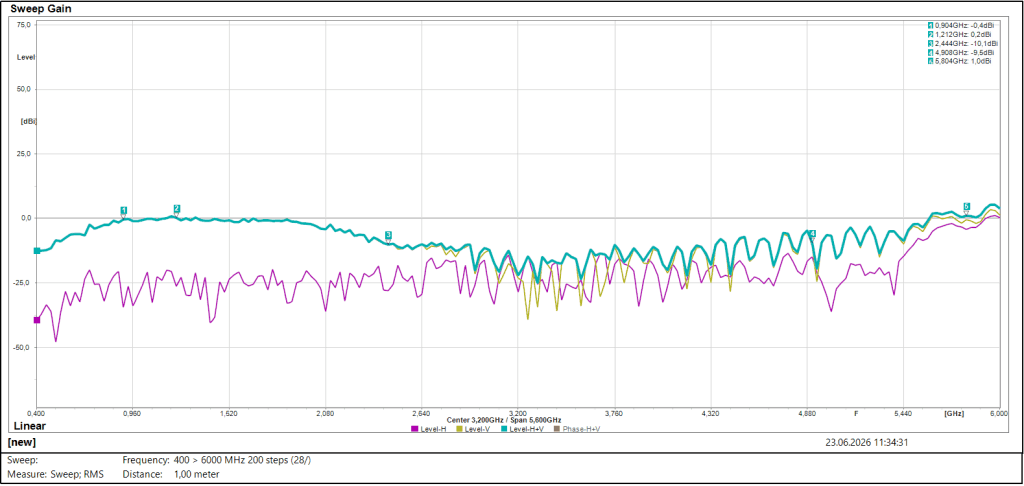
Broadband Omni Antenna 1–8 GHz — Gain, Radiation Pattern and SWR
Lab-measurement report for the broadband omnidirectional Omni 1–8 GHz antenna: gain versus frequency, the radiation pattern at 5800 MHz and the SWR match across the operating band. Measurements taken at 1 m.
View report →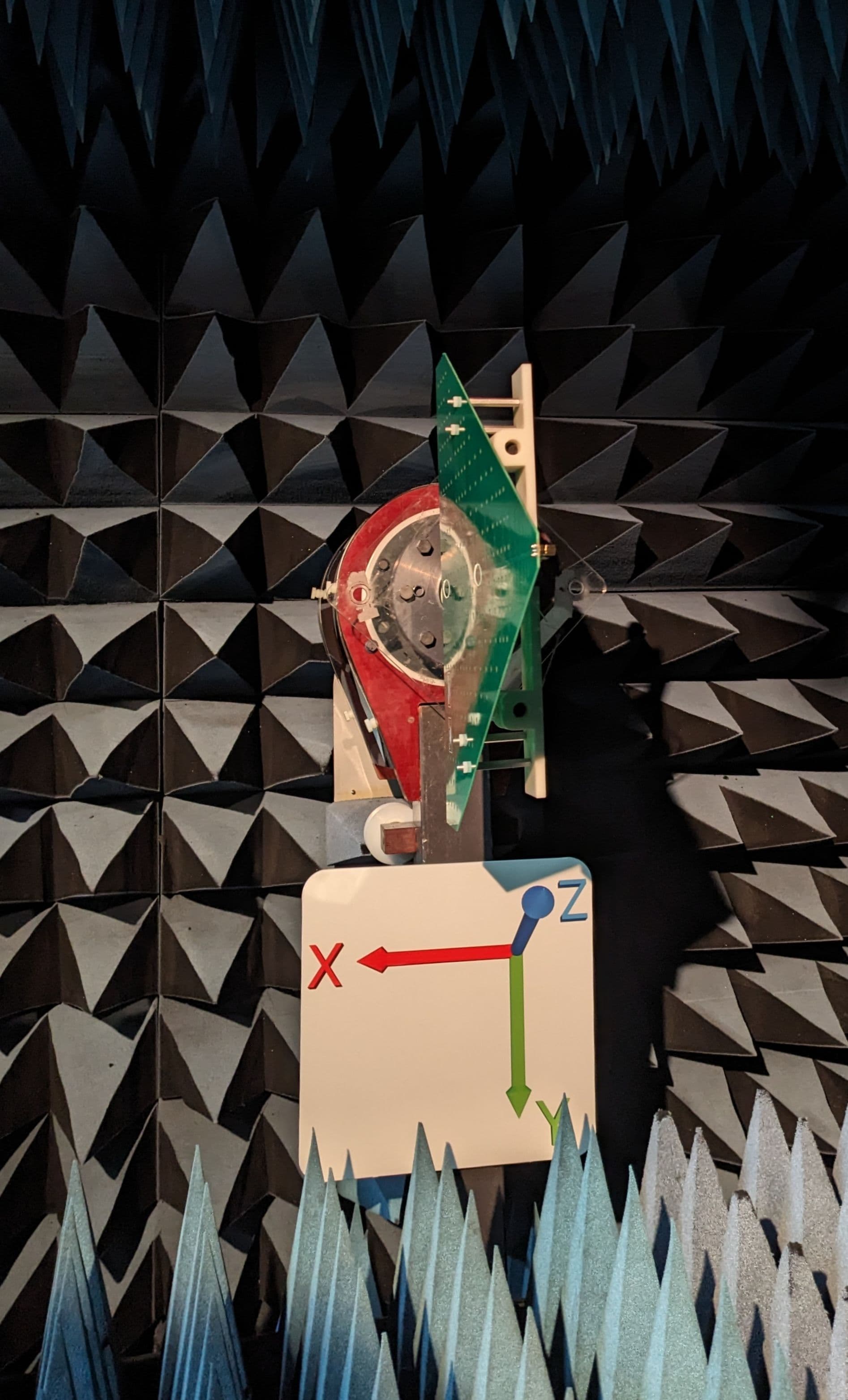 300–6000 MHz
Log-periodic antenna 300–6000 MHz — radiation pattern
Anechoic-chamber radiation-pattern measurement of the 300–6000 MHz log-periodic antenna. The larger model in the range: a 500 × 430 mm board working from 300 MHz. The 2D and 3D plots are interactive — rotate and zoom them straight in the browser.
View report →530–6000 MHzLog-periodic antenna 530–6000 MHz — radiation pattern
Anechoic-chamber radiation-pattern measurement of the 530–6000 MHz log-periodic antenna. The compact model in the range: a 305 × 260 mm board with a 530 MHz lower edge. The 2D and 3D plots are interactive — rotate and zoom them straight in the browser.
View report →How we measure
Anechoic chamber
Measurements are taken in an anechoic chamber: its absorbing lining kills re-reflections, so the pattern is not overlaid with signals bouncing off walls, ceiling and nearby equipment. That is the difference between the antenna’s own characteristic and the characteristic of the room it was switched on in.
What a report contains
Every report carries a polar plot (2D), a spatial plot (3D) and the raw measurement data available for download. The plots are interactive — rotate, zoom and read them straight in the browser, with no separate software.
How to read a pattern
The main lobe shows the direction of maximum radiation, its width is the antenna’s working sector, and the back and side lobes show how much energy goes past the target. For an omnidirectional antenna what matters is how round the horizontal plane is; for a directional one, how narrow the main lobe is.