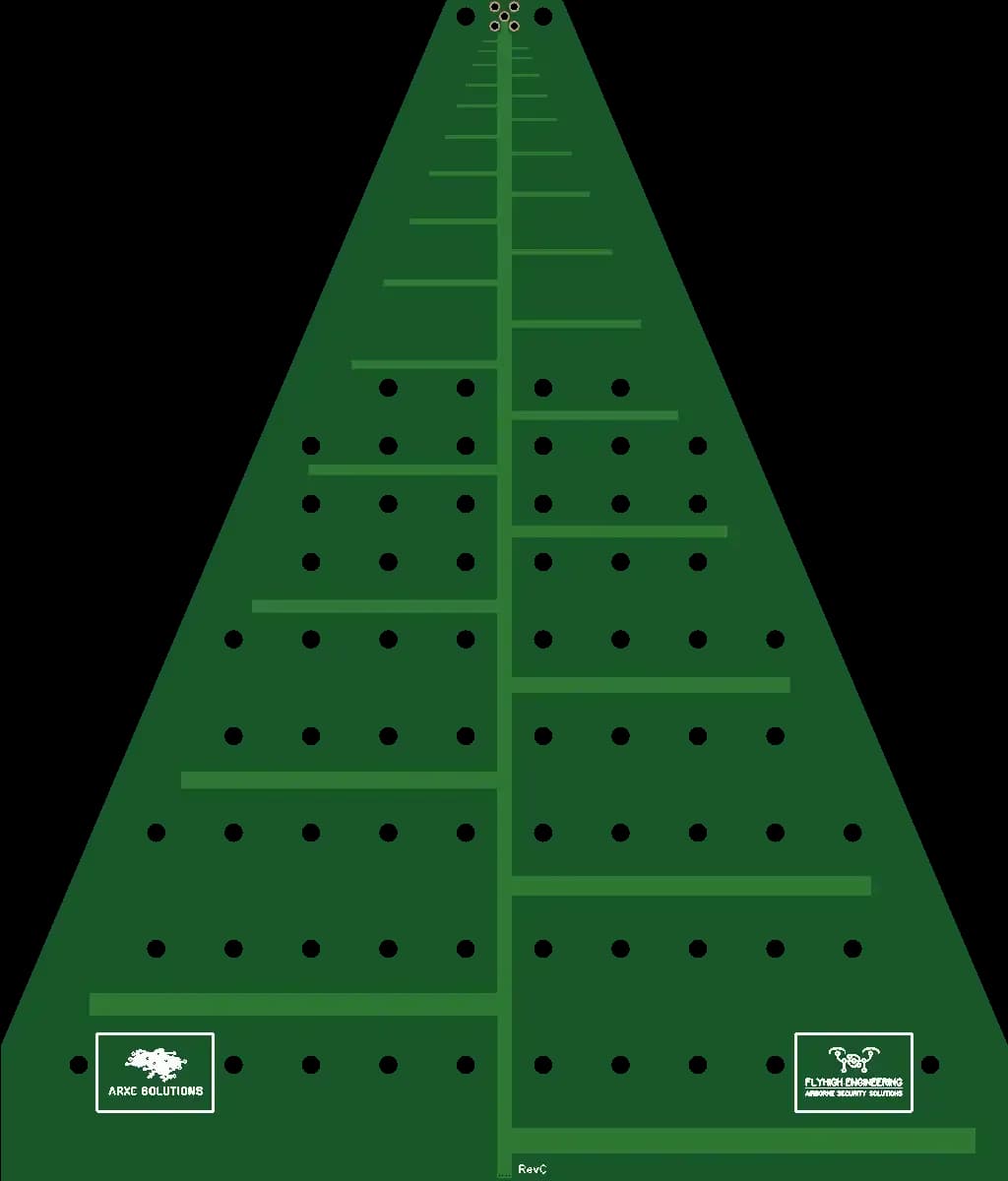
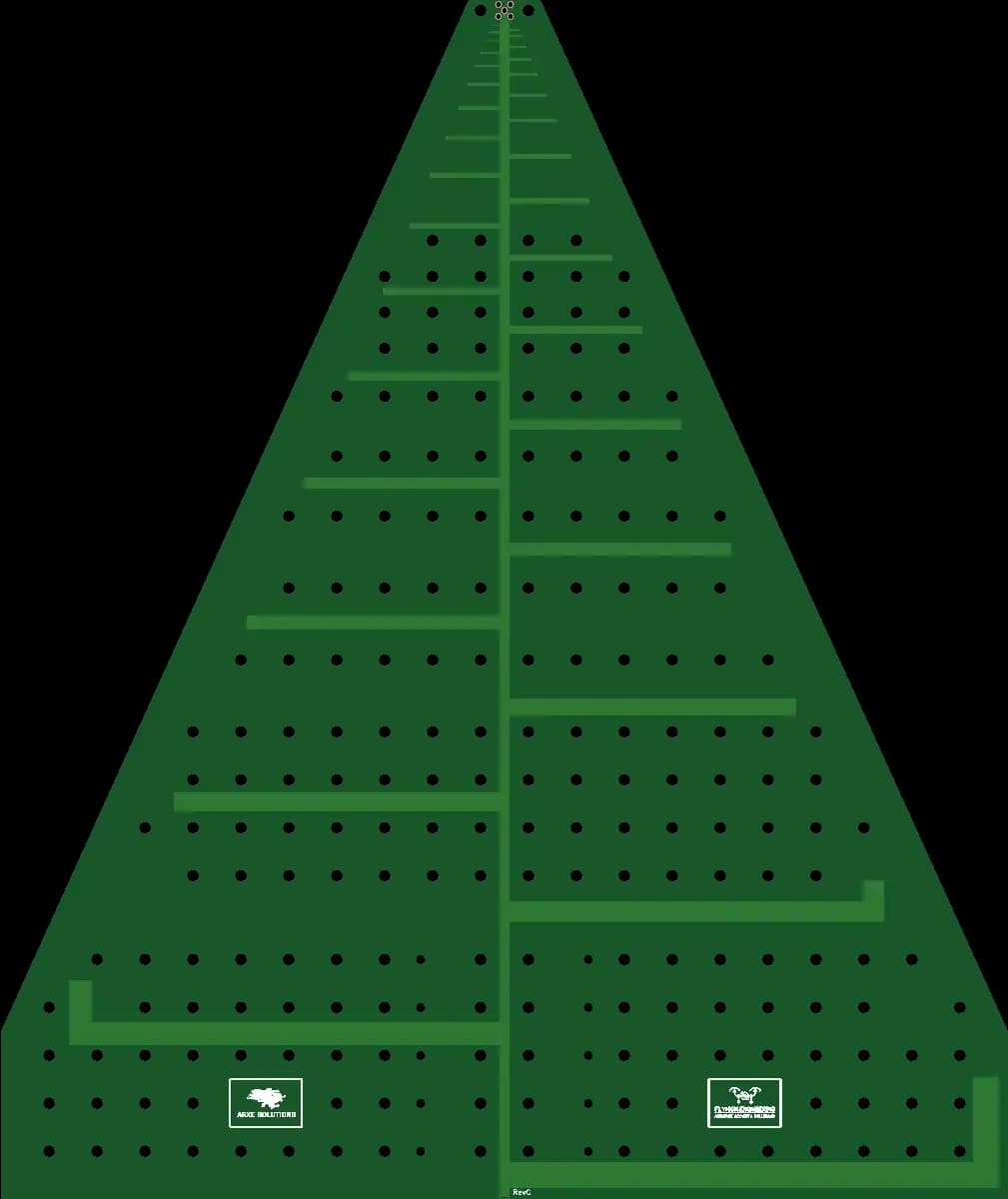
Sirio SPH-1.5÷6-17 directional antenna, 1.5–6 GHz, 17 dBi
Sirio SPH-1.5÷6-17 wide-band directional antenna: the whole 1.5–6 GHz range at SWR ≤ 1.8 with no tuning at all, up to 17 dBi of gain, SMA-female, 15 W. UV-stabilised ABS radome, mast mount for Ø25–42 mm. 4G-LTE, 5G 3.4–3.8 GHz, Wi-Fi 2.4/5 GHz, WiMAX, DECT.
Specifications
| RF | |
|---|---|
| Antenna type | Wide-band directional PCB |
| Working range | 1500–6000MHz |
| SWR | ≤ 1.8 across the whole range, no tuning required |
| Gain (max.) | 17 dBi (14.9 dBd) at 6 GHz |
| Impedance | 50Ω |
| Polarisation | Linear vertical |
| Radiation pattern | Directional |
| 3 dB beamwidth (E/H) | 53°/78° at 1795 MHz … 22°/27° at 5512 MHz |
| Front-to-back ratio | ≥ 20dB |
| Radiation angle | 0° |
| Max. power (CW, +30 °C) | 15 W (1.5–4 GHz) / 10 W (4–6 GHz) |
| Grounding protection | All metal parts DC-grounded, inner conductor capacitively coupled |
| Connector | SMA-female |
| Supported systems | GSM-1800, 4G-LTE, 5G 3.4–3.8 GHz, Wi-Fi 2.4/5 GHz, WiMAX, DECT, V2X |
| Mechanical | |
| Materials | Aluminium, stainless steel, UV-stabilised ABS, PCB |
| Radome | White UV-stabilised ABS |
| Dimensions | 345 × 135 × 73mm |
| Turning radius | 310mm |
| Weight | 450g |
| Wind load | 61 N at 150 km/h; survival up to 180 km/h |
| Wind surface | 0.04m² |
| Operating temperature | −40…+80°C |
| Mounting | Ø25–42 mm mast (U-bolts), Ø25–70 mm clamp (optional), wall |
| Manufacturer | Sirio Antenne, Italy |
| Manufacturer part number | 2130003.00 |
Description
The Sirio SPH-1.5÷6-17 is a wide-band directional base-station antenna that covers everything from 1.5 to 6 GHz in a single unit. SWR stays below 1.8 across the whole range, so there is nothing to tune for a given frequency: the antenna is equally ready at 1800 MHz, at 3.5 GHz and at 5.8 GHz.
The radiating element is a PTFE printed circuit board — hence the low losses at the top of the range and the stable match across the band. The board sits behind a UV-stabilised ABS radome, so performance does not drift after a season outdoors.
What falls inside 1.5–6 GHz
- GSM-1800 and DCS-1900 cellular
- UMTS 2100 and every 4G-LTE band above 1.5 GHz
- 5G n77/n78 — 3.4–3.8 GHz
- Wi-Fi 2.4 GHz and Wi-Fi 5 GHz, WiMAX 2.5 and 3.5 GHz
- DECT 1.9 GHz and V2X 5.9 GHz
- FPV channels at 2.4 and 5.8 GHz, control and telemetry links
Gain rises with frequency
Gain is not flat across the band: roughly 9 dBi at 1.5 GHz, about 13 dBi at 3.5 GHz and up to 17 dBi (14.9 dBd) at 6 GHz. That is ordinary behaviour for a log-periodic structure — the shorter the wave, the more elements work in phase. In practice the antenna delivers the largest gain exactly where it is needed most: at 5–6 GHz, where cable and free-space losses are highest.
Directivity rather than raw power
The main lobe narrows with frequency: 53°/78° (E/H) at 1795 MHz, 46°/62° at 2500 MHz, 39°/42° at 3550 MHz and 22°/27° at 5512 MHz. Front-to-back ratio is at least 20 dB. High in the band the antenna works as a narrow beam — more range, and protection from interference arriving from the sides and the rear. Rotating the antenna also lets you estimate the bearing to a signal source.
Power and grounding
Maximum power is 15 W over 1.5–4 GHz and 10 W over 4–6 GHz (CW, at +30 °C). The connector is SMA-female. All metal parts are DC-grounded and the inner conductor is capacitively coupled, which drains static build-up and protects against induced surges in a storm.
Mounting and weather
The antenna clamps to a Ø25–42 mm mast with the supplied aluminium bracket and U-bolts; an optional clamp extends that to Ø25–70 mm, and wall mounting is supported as well. Wind load is 61 N at 150 km/h, with rated survival up to 180 km/h at a 0.04 m² wind surface. Operating temperature is −40 to +80 °C.
Mount the wide face of the housing vertically — that orientation gives the linear vertical polarisation all the published figures are measured for.
Who it is for
- 4G/5G base stations and repeaters, including mobile and temporary installations
- Wi-Fi and WiMAX point-to-point and point-to-multipoint links
- FPV ground stations on 2.4 and 5.8 GHz
- radio monitoring and direction finding above 1.5 GHz
- test benches that need one reference antenna for the whole band
Below 1.5 GHz the antenna does not work. If your task involves 433 MHz, 868 MHz, 900 MHz or 1.2 GHz, look at the log-periodic antennas 530–6000 MHz and 300–6000 MHz.
Buying in volume? The price changes
Volume pricing is worked out against your quantity. Tell us how many units you need and we will come back with a calculation within one business day.
- Pricing scales with volume
- Delivery across Ukraine
- Reply within a business day
Frequently asked questions
- Does the antenna need tuning for a specific frequency?
- No. SWR stays below 1.8 across the entire 1.5–6 GHz range, so the antenna is ready to work as soon as it is connected — no element trimming, no length matching.
- Why is gain given as a range rather than one number?
- Because it depends on frequency: about 9 dBi at 1.5 GHz and up to 17 dBi at 6 GHz. The datasheet quotes the maximum — 17 dBi (14.9 dBd) at the top of the range. The gain-versus-frequency chart is in the product gallery.
- Is it suitable for 5G?
- Yes. The n78 band (3.3–3.8 GHz) and n77 fall entirely inside the working range, as do all 4G-LTE bands above 1.5 GHz.
- Will it receive 900 MHz or 1.2 GHz?
- No, those are below its working range. For frequencies under 1.5 GHz you need the log-periodic antenna 530–6000 MHz, or the 300–6000 MHz version if 433 MHz is involved.
- In which orientation should it be mounted?
- With the wide face of the housing vertical — that orientation gives the linear vertical polarisation all the datasheet figures are measured for. The U-bolt bracket for Ø25–42 mm masts is included.
Reviews
No reviews yet. Be the first to leave one.