How to Choose an 8-Megapixel Surveillance Camera
Picking an 8-megapixel camera looks simple: more megapixels, better image. In practice what matters is not the number in the datasheet but how many pixels land on each metre of the scene at the distance you care about. Here is what that means when buying.
Megapixels do not give you range — the lens does
This is the mistake that costs most projects. 8 MP means 3840×2160 pixels, and those pixels are spread across the whole width of the frame. How far away you can recognise a face depends on how wide a scene your lens covers at that distance.
The EN 62676-4 standard sets the reference points in pixels per metre (px/m):
- ~25 px/m — detection: you can tell something is moving
- ~125 px/m — recognition: you can identify someone you know
- ~250 px/m — identification: you can describe a stranger
- 130–200 px/m — reading a licence plate
Now the arithmetic. A wide 2.8 mm lens covers roughly 100° horizontally. At 30 metres the frame spans about 72 metres across. Divide: 3840 / 72 ≈ 54 px/m. That is enough to see movement and tell that it is a person — but not enough to recognise a face.
To get identification at 30 metres you need a narrower lens or a camera mounted closer. Hence the rule: settle the distance and the task first, work out the field of view you need, and only then choose the camera.
What 8 MP actually buys you
High resolution wins where you need wide coverage without losing detail: car parks, yards, warehouses, perimeters. One 8 MP camera often replaces two or three 2 MP ones, because the wider frame stays legible.
The second case is digital zoom in recorded footage. Even if you watch a wide view live, a 4K archive lets you zoom into a region afterwards and see detail that simply does not exist at 2 MP.
The price is a higher bitrate and greater demand for light. The smaller each sensor pixel is, the less light it collects — so at dusk a good sensor beats a bigger megapixel number.
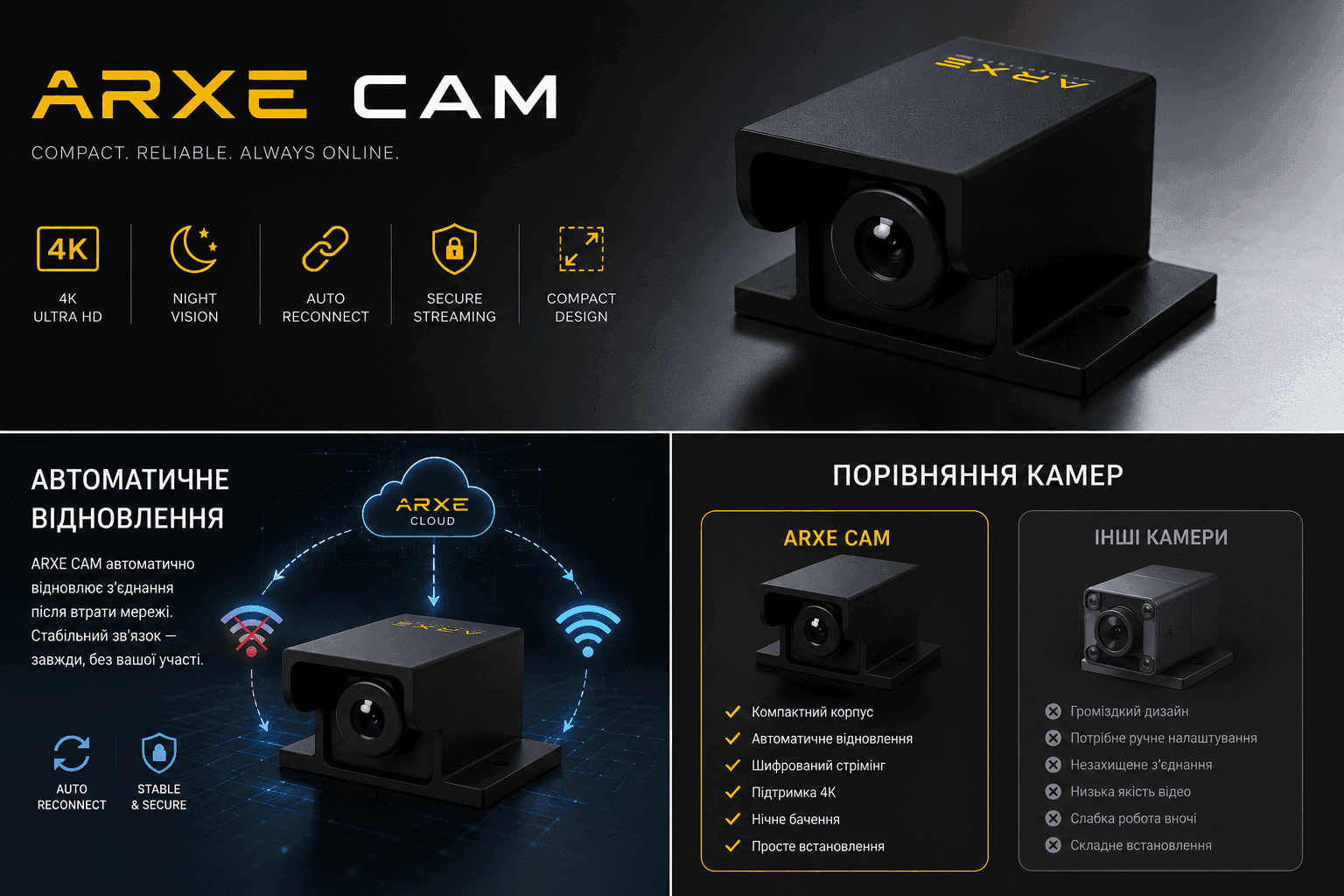
SigmaStar SSC338Q + Sony STARVIS IMX415
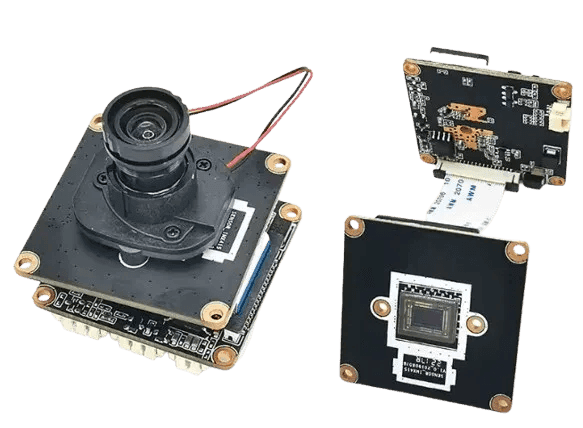
This pairing is the typical basis for 8 MP: a SigmaStar SSC338Q SoC with a Sony STARVIS IMX415 sensor.
- 4K (3840×2160) at 20 fps — ample for surveillance; lower resolutions run at up to 30 fps
- H.265+ / H.265 / H.264 — hardware encoding, lighter load on the network and the archive
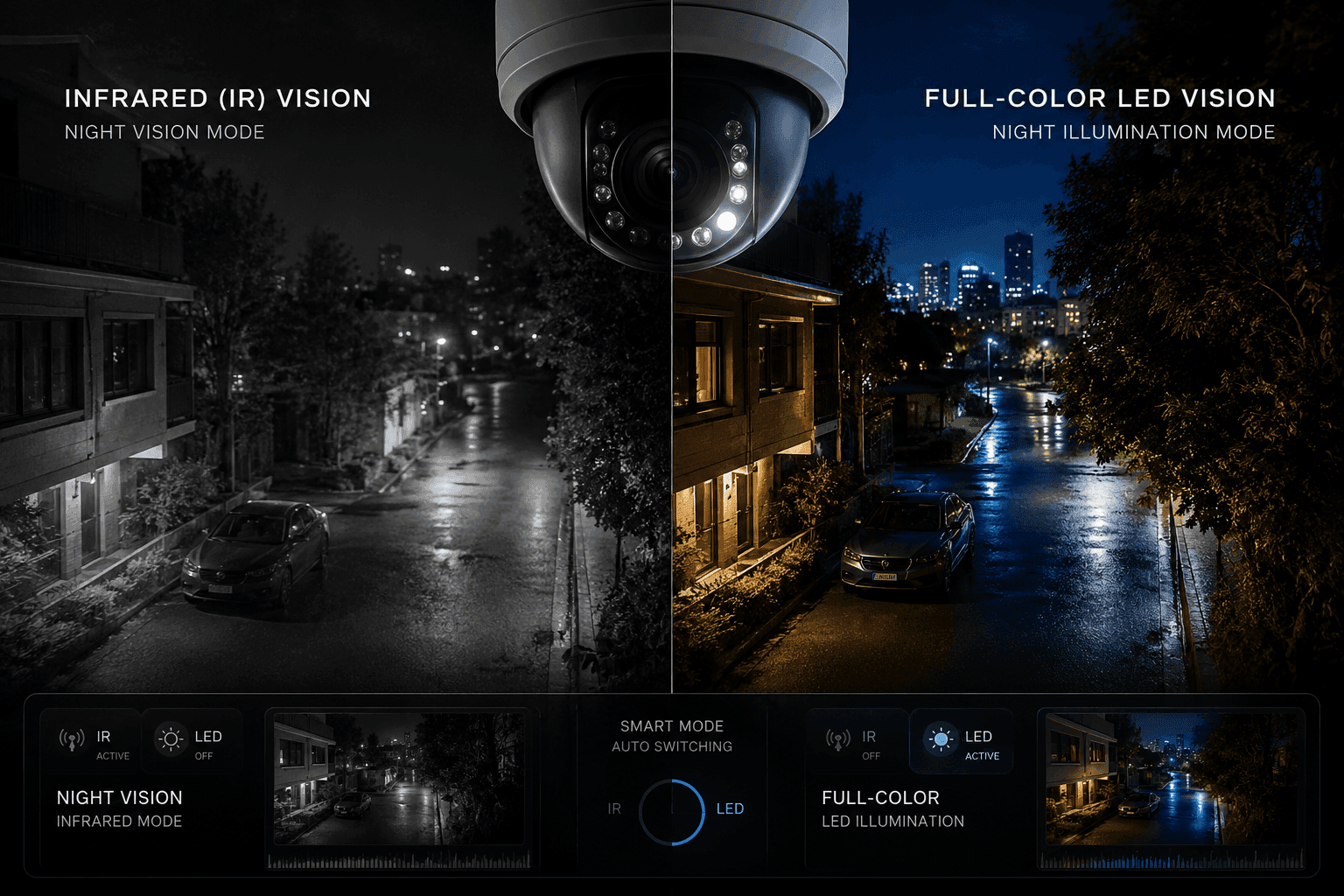
- Day/night: mechanical IR-cut with Dual-Light — the filter physically swings away at night so the camera sees in IR
- Two-way audio, Ethernet with ONVIF / RTSP — integrates with third-party recorders and VMS
- 38×38 mm board, operating range −40…+85 °C
One thing to be clear about: this is a module for integration, not a finished outdoor camera in a housing. The enclosure, mounting and weather protection are yours to choose.
Other specs worth reading
Light sensitivity. Look for a lux figure, and specifically whether it is quoted separately for colour and for black-and-white. "0 lux" with no mention of IR illumination is marketing.
Lens. Focal length matters more than megapixels. 2.8 mm gives a wide close-range view; 6–12 mm gives a narrow sector at distance.
Codec and bitrate. H.265+ saves noticeably against H.264 — same quality, smaller files, freer link.
Connection. Ethernet is the most stable option. Wi-Fi and 4G exist for places where cable is impossible, and they are a separate class of device.
Housing and protection. IP66/IP67 ratings apply to finished cameras in an enclosure. With a module, protection is whatever your housing provides.
Common mistakes
- Buying more megapixels instead of the right lens. Range comes from optics, not resolution.
- Not sizing the archive. 4K fills a disk several times faster than 2 MP. Work out retention in advance.
- Ignoring light. High resolution in the dark without IR gives you noise, not detail.
- Skipping compatibility. ONVIF/RTSP are what let the camera work with your recorder.
Frequently asked questions
How far can an 8 MP camera "see"? The honest answer is: it depends on the lens. Work out px/m — 3840 divided by the frame width in metres at your distance. Identification needs about 250 px/m.
Is 8 MP enough to read licence plates? Only if the plate falls in a zone with 130–200 px/m. With a wide lens at long range, no — you need a narrower angle or a dedicated camera per lane.
Why 20 fps when 30 exists? For surveillance 20 fps is enough: motion reads clearly and the archive is smaller. 30 fps is for fast scenes.
What does Dual-Light do? A mechanical IR-cut filter keeps colours correct by day and swings away at night so the camera can work in infrared.
Module or finished camera? A module is for building your own device or fitting the camera into your own housing. A finished camera is for an out-of-the-box outdoor installation.
What to choose
If you need an 8 MP module for integration, look at the SigmaStar SSC338Q + IMX415 camera. If the task is simply remote viewing without a static IP, a push-to-server solution will suit you better.
Wholesale discounts are available — get in touch and we will price it for your volume.