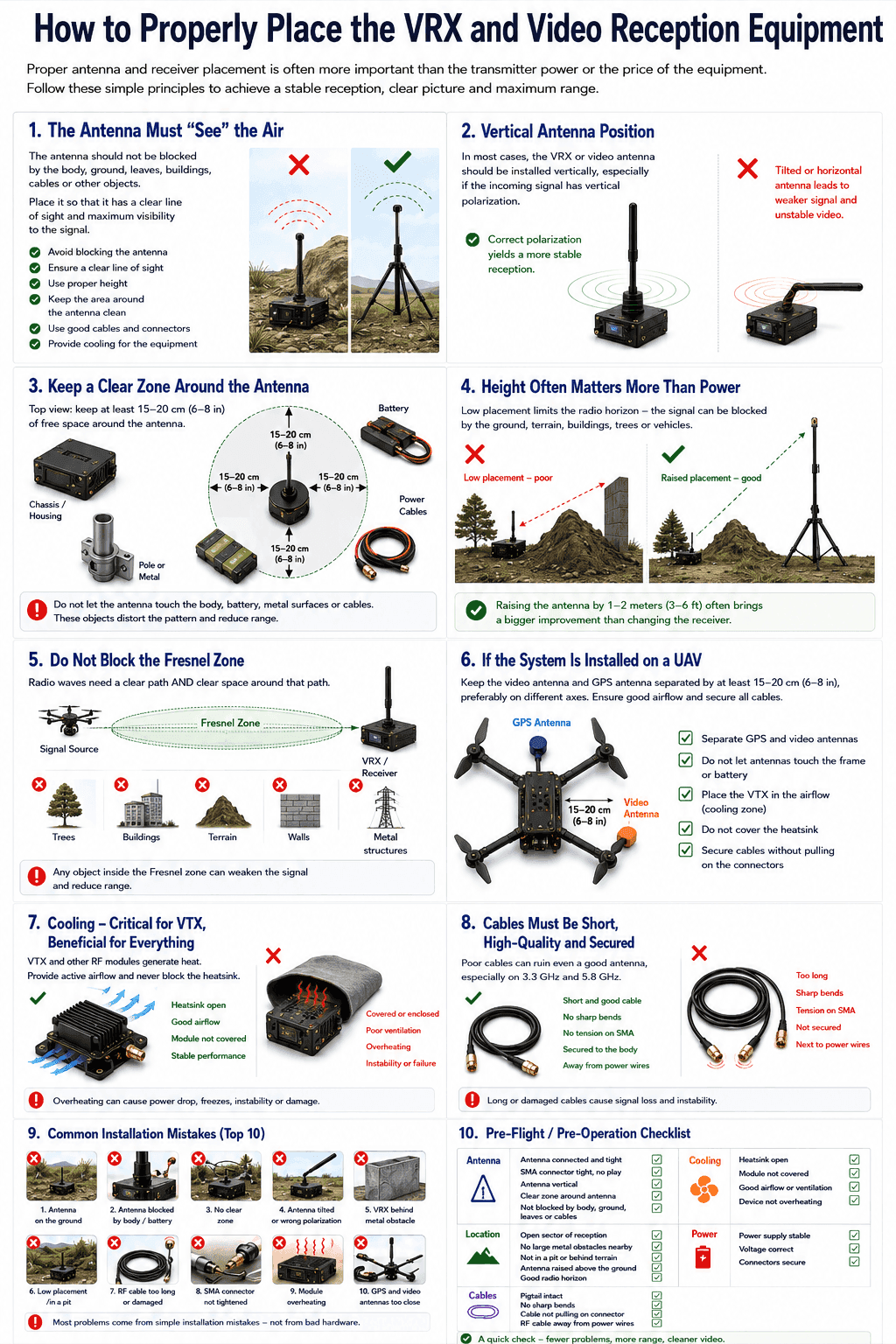
How Antenna Radiation Patterns Work
A radiation pattern is the "map" that shows which directions an antenna radiates and receives in, and how strongly. It is this — not the abstract megahertz or decibels in a datasheet — that decides whether you hear the other end where it actually is. Here is how to read it and what follows for choosing an antenna.
What the pattern shows
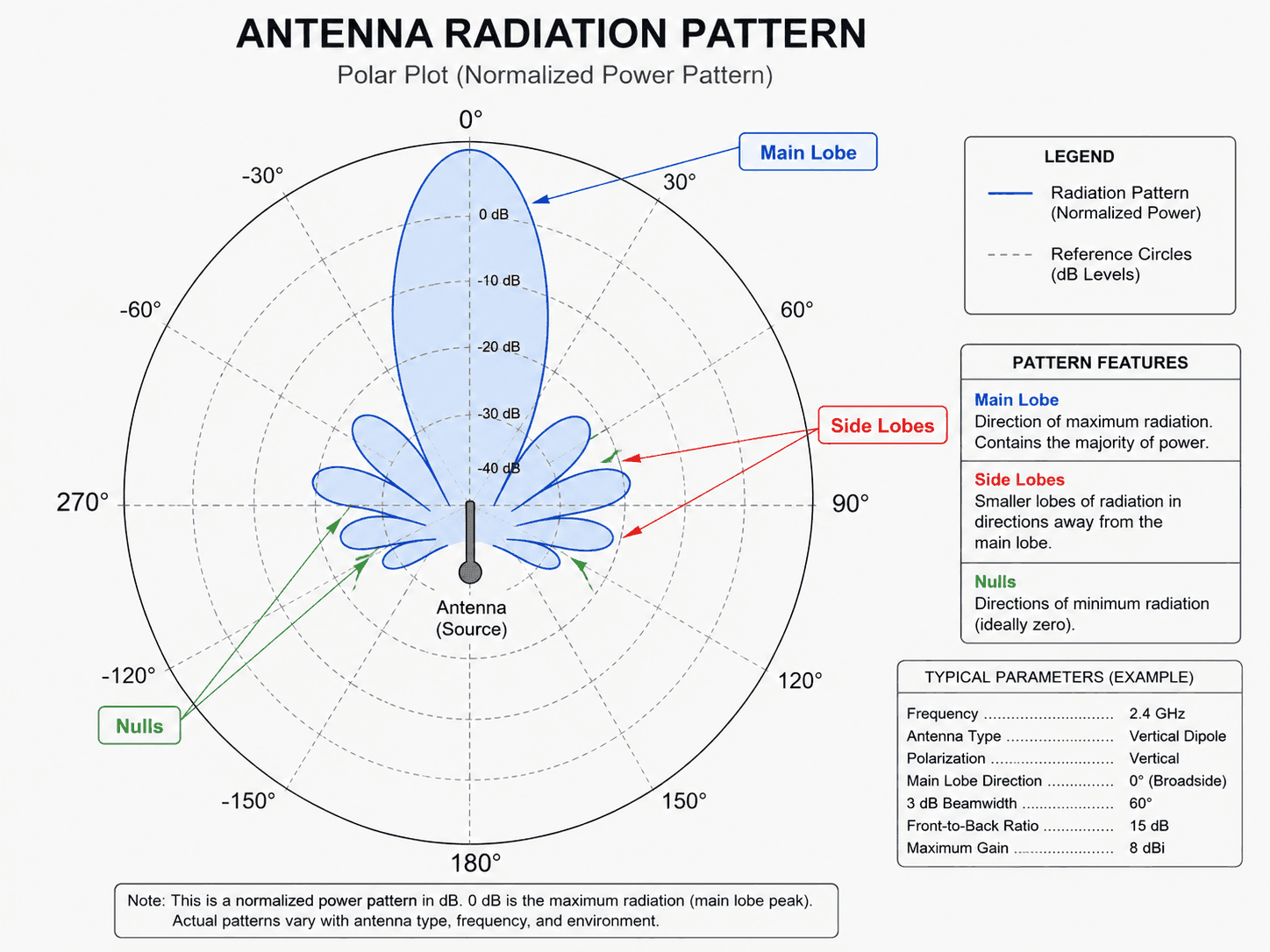
Picture looking down at an antenna and measuring signal strength in every direction around a circle. Join those points and you get the radiation pattern. It is drawn in polar coordinates (intuitive, as "lobes") or Cartesian (more detailed, better for precise readings).
There are three things on it worth knowing:
- Main lobe — the direction of maximum radiation. Most of the power is concentrated here; this is where the antenna "looks".
- Side lobes — smaller lobes pointing elsewhere. They are not ignored — the goal is to keep them low: it is through side lobes that an antenna picks up interference from the sides and wastes energy where it is not wanted.
- Nulls — directions where the antenna receives almost nothing. Sometimes a drawback, sometimes a tool: you can point a null at a source of interference to reject it.
Two datasheet numbers follow directly from the pattern: the −3 dB beamwidth (how wide the main sector is) and the front-to-back ratio (how deaf the antenna is to what is behind it).
Antenna types by pattern shape
Pattern shape is the real difference between antenna types:
- Isotropic — a uniform sphere in all directions. A theoretical reference that does not exist in nature, but gain (dBi) is measured against it.
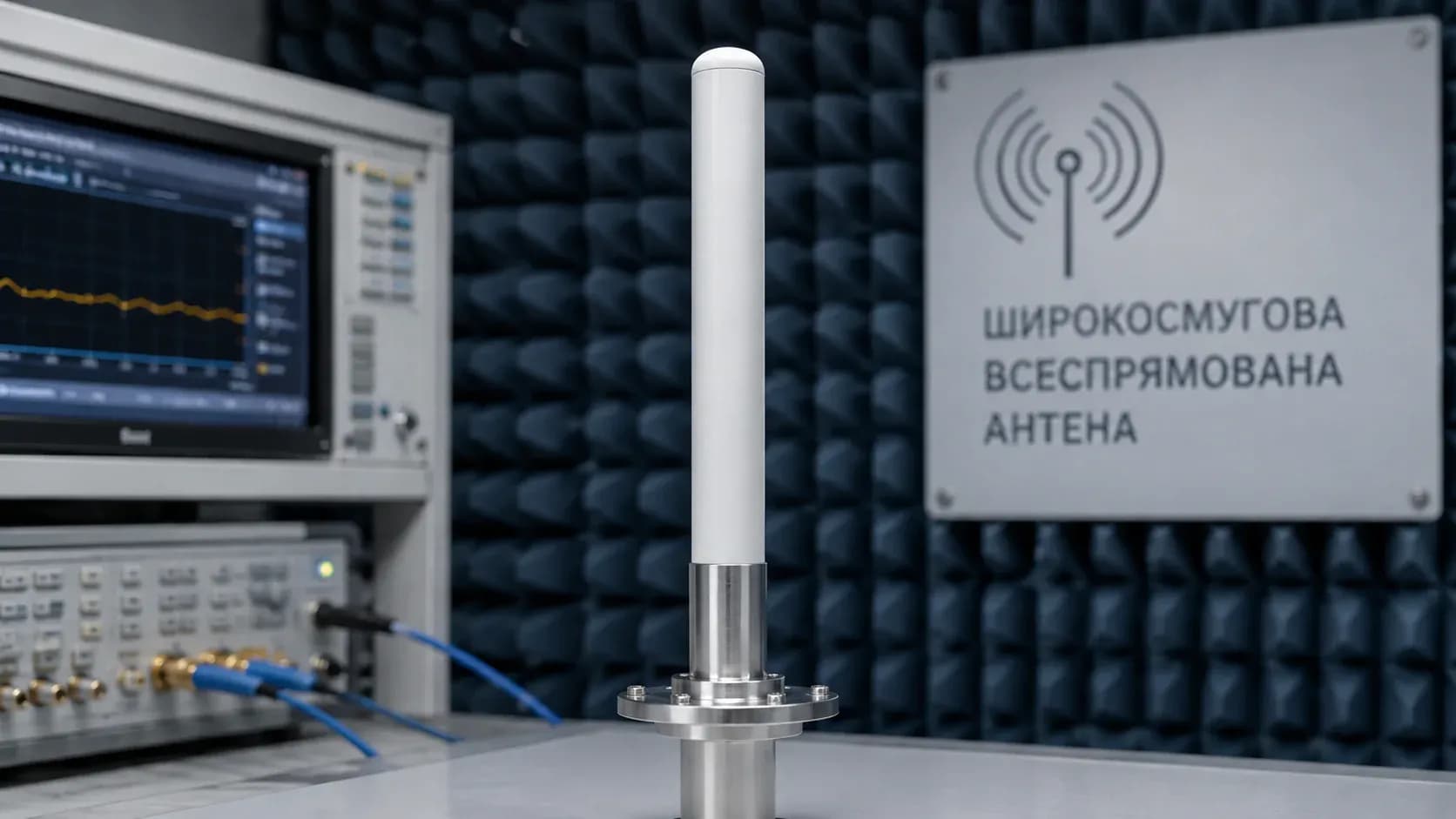
- Omnidirectional (whip, disc) — a circle in the horizontal plane. Receives from all azimuths; useful when the direction is unknown.
- Dipole — a "figure-8": maximum to two sides, nulls along the axis.
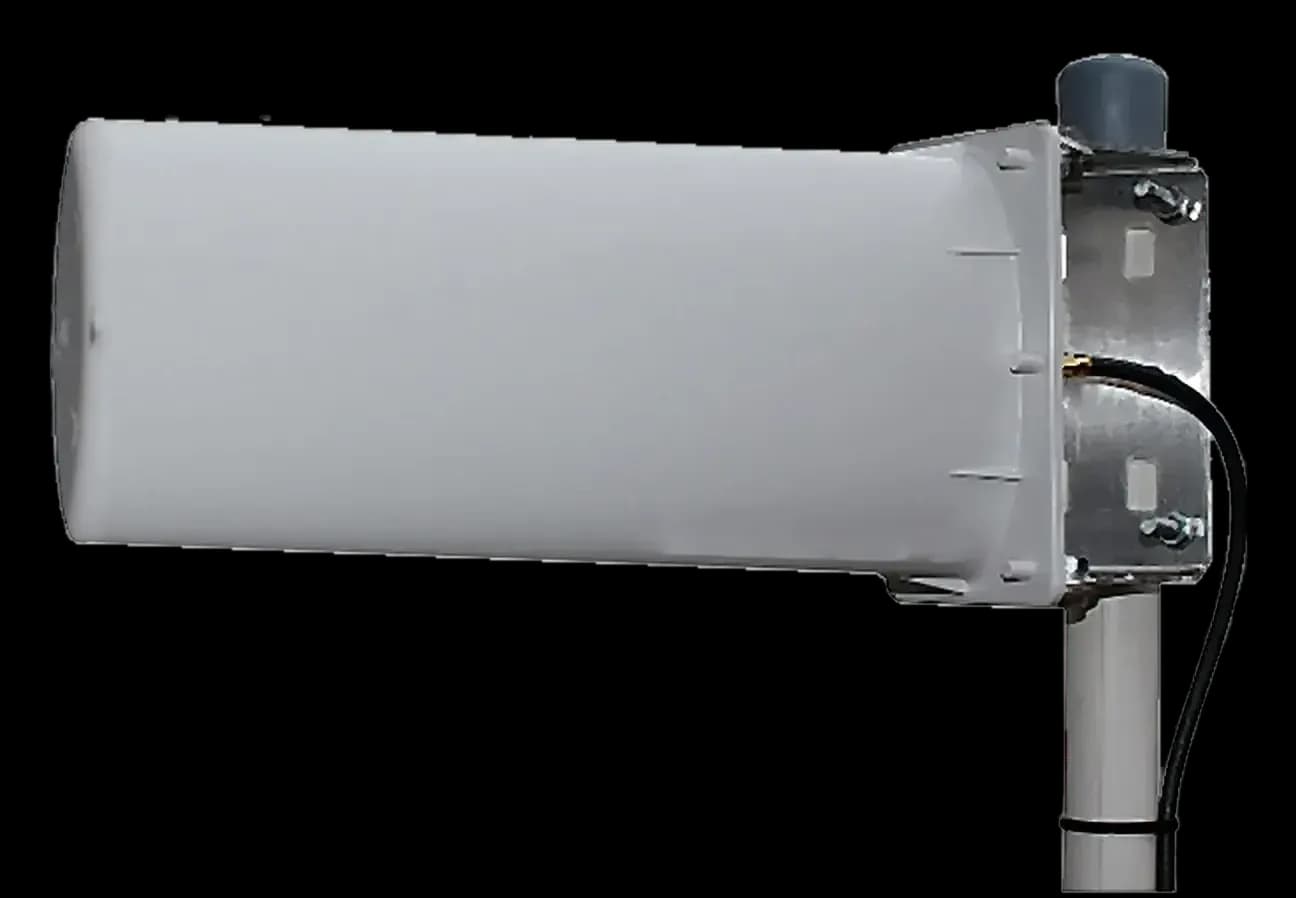
- Directional (Yagi, log-periodic) — one elongated lobe forward. Gives range and rejects side interference.
For GNSS receivers, for instance, the ideal is uniform across azimuth and a hemisphere upward, so satellites stay visible at various angles.
Why it decides link quality
The pattern determines how the signal is distributed in the far field — where the link actually works. A directional antenna pointed past the target loses to a "weaker" one aimed precisely. An omnidirectional placed where you need range in one direction will disappoint too.
So the choice comes down to one question: do you know the direction, and is it constant? If yes, take a directional one (a log-periodic) for range and rejection of side interference. If not, or there are several directions, take an omnidirectional. We covered that logic in detail in narrowband versus log-periodic.
How patterns are measured
There are two routes. Simulation — computing the pattern in software at the design stage, no hardware. And measurement — rotating the antenna in an anechoic chamber (walls absorb reflections) and recording the signal at each angle. The model shows how it should be; the measurement shows how it actually is.
We measure our antennas exactly this way and publish the results — you can rotate the real 2D and 3D patterns in the measurement reports. That is the same radiation pattern, only taken from an actual product rather than a textbook.
Frequently asked questions
Does the pattern change over time? The antenna itself does not, but its surroundings change the pattern: nearby metal, the ground, a housing, a mount. So the real on-site pattern always differs from the lab one.
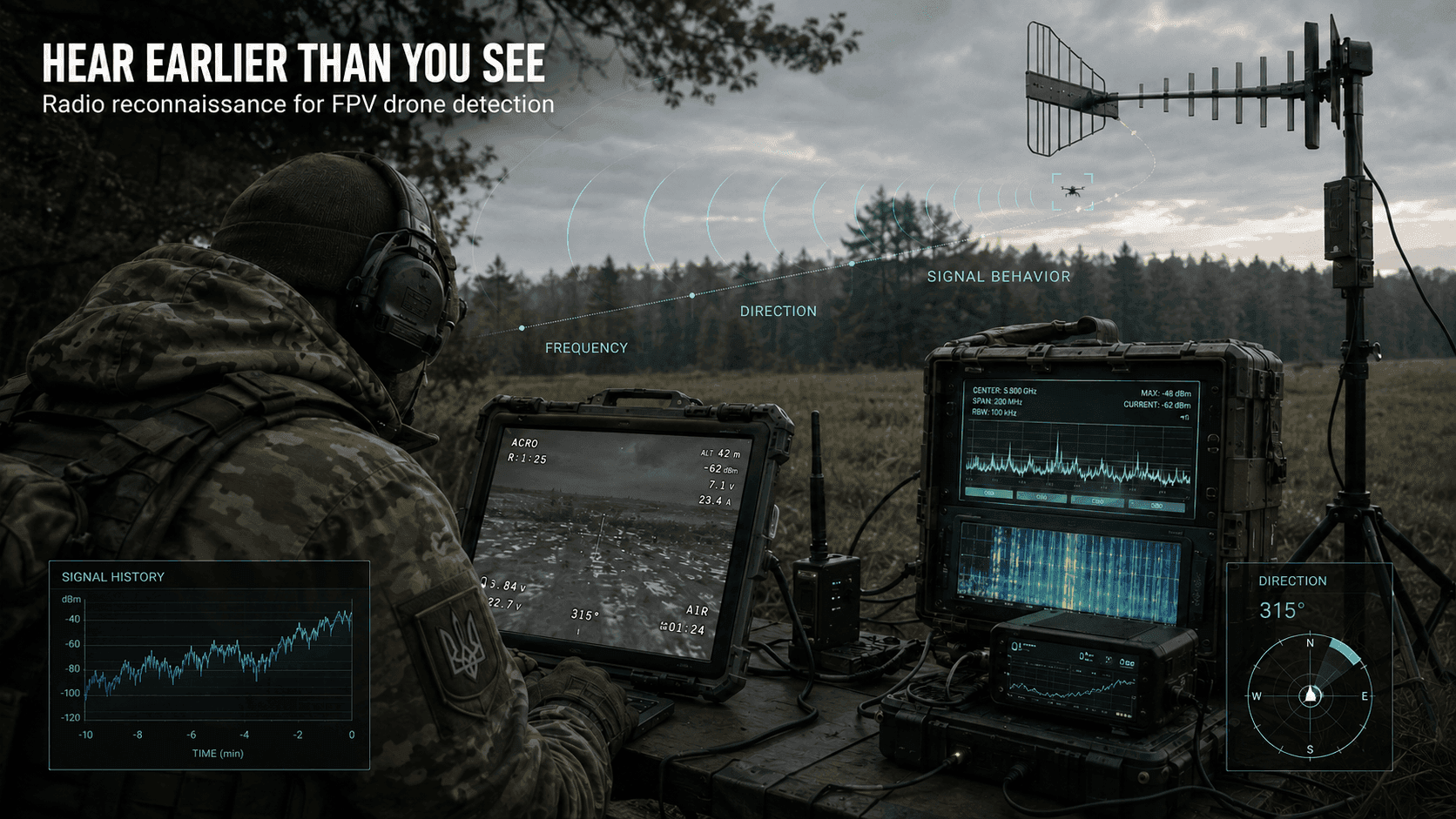
Which pattern suits FPV? It depends on the task. Omnidirectional — when the aircraft flies around and the direction keeps changing. Directional — when you need maximum range in one direction. For range an omni is not the best choice, despite the common belief.
How do I choose an antenna for SDR? By frequency range and task. For "what is out there at all" monitoring an omni is better; for pulling a weak signal from a known direction, a directional.
What are side lobes and why are they bad? They are stray radiation/reception away from the main direction. Interference enters the channel through them, so good antennas keep them as low as possible.
Can I get by with simulation, no measurement? At the design stage, yes. But only measurement confirms the final quality: real materials and geometry always deviate from the model.
In short: the radiation pattern is the first thing to look at when choosing an antenna. Its type, beamwidth and side-lobe level tell you more about an antenna than any single gain figure.