Jul 24, 2026
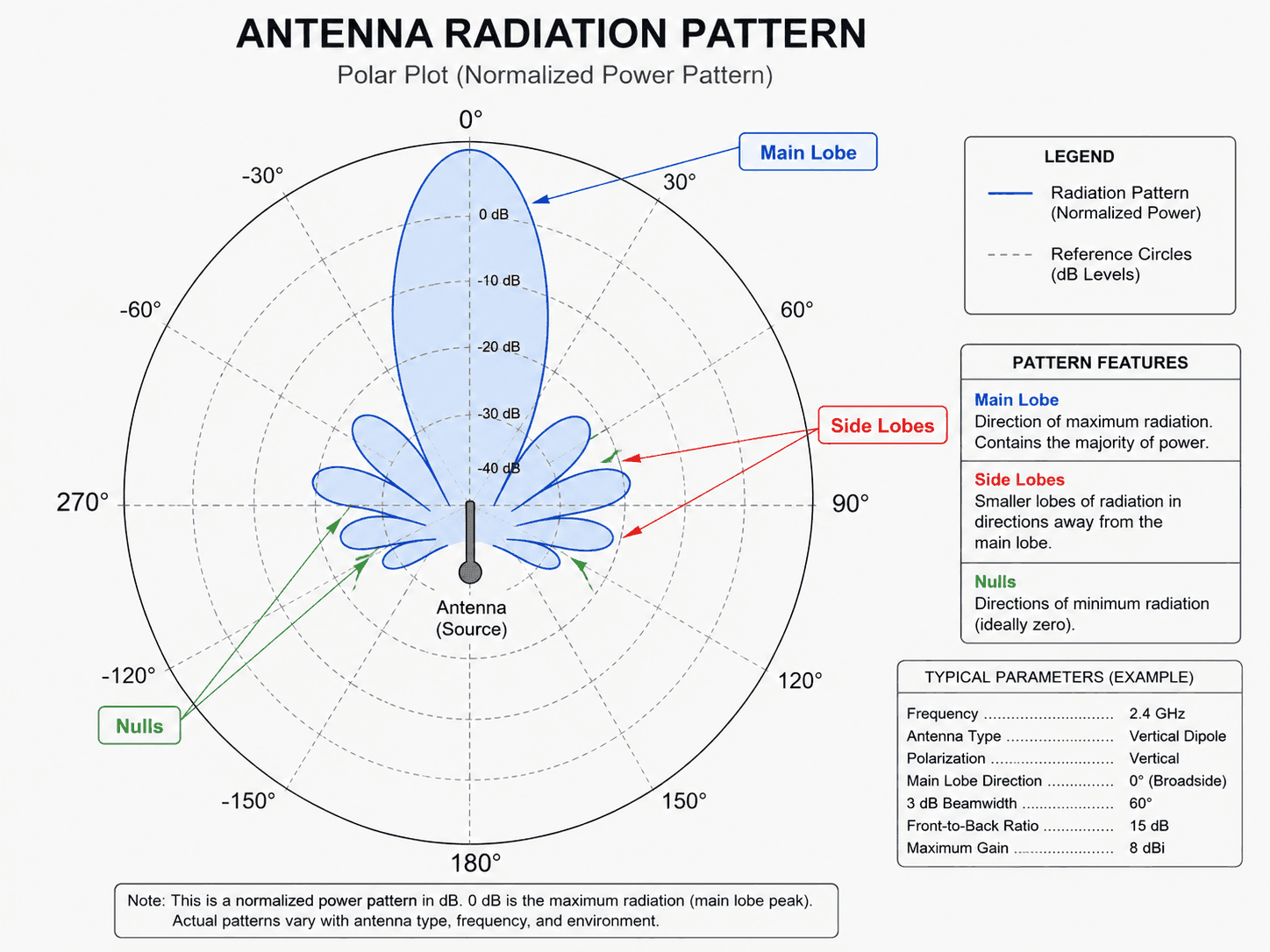
How Antenna Radiation Patterns Work
What a radiation pattern shows — main lobe, side lobes and nulls — and how its shape drives your choice of antenna for FPV and SDR.
What a radiation pattern shows — main lobe, side lobes and nulls — and how its shape drives your choice of antenna for FPV and SDR.
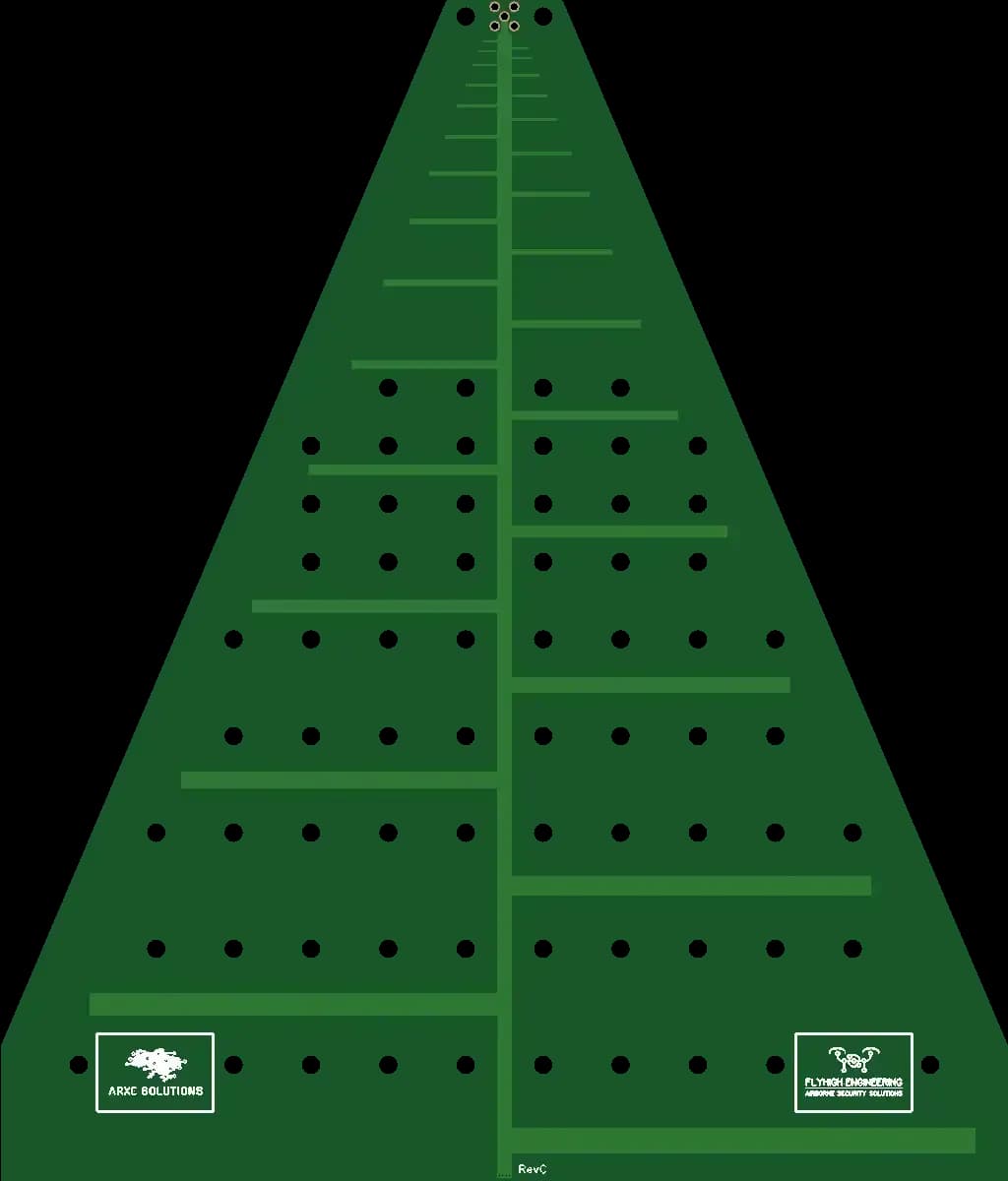
When a log-periodic antenna suits SDR and FPV, what directionality and the 530–6000 MHz band buy you, and what to watch when mounting it.
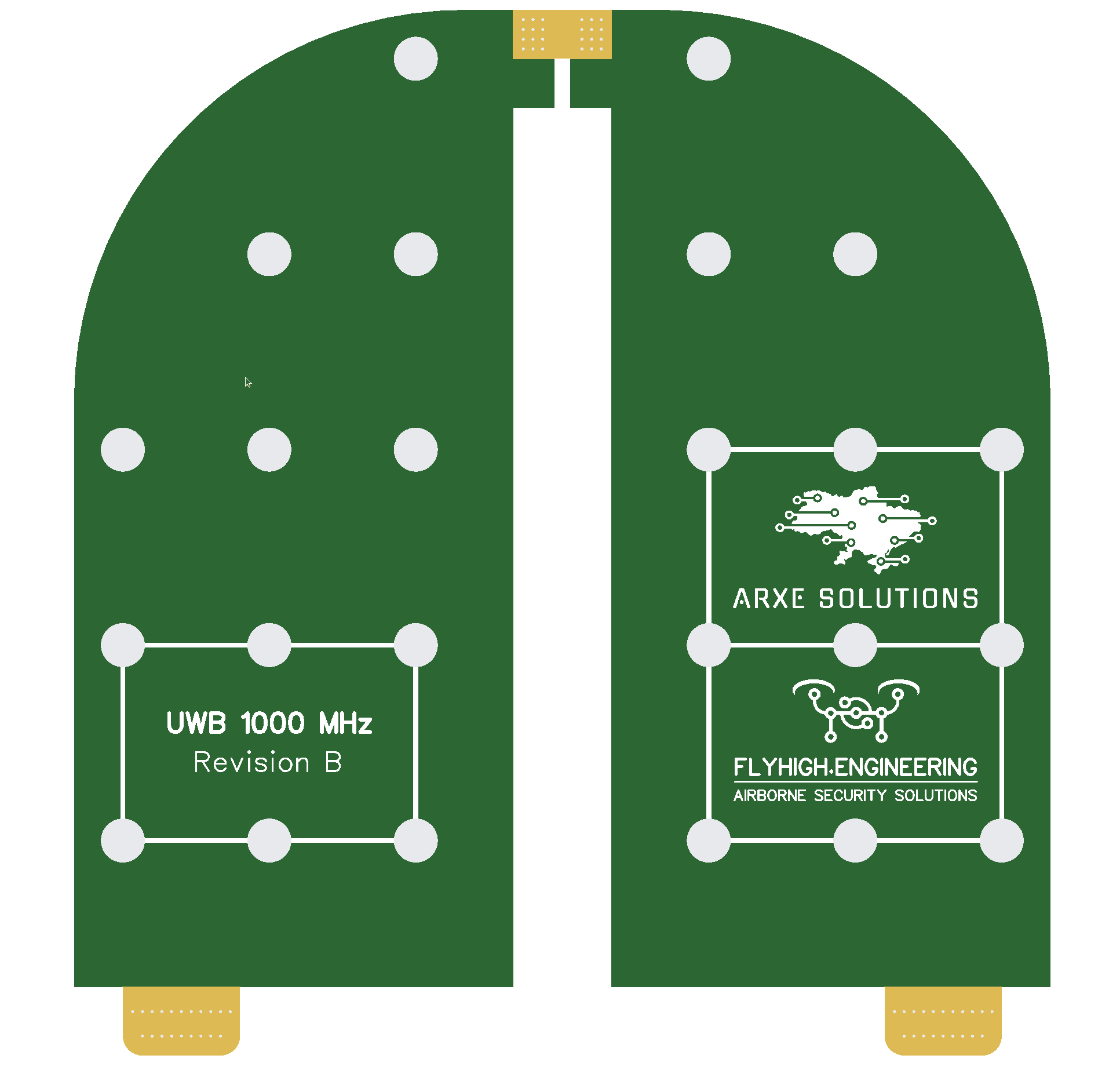
When 360° coverage beats gain: how to read an omnidirectional pattern, where 8.8 dBi comes from, and what actually decides link quality.

Open firmware OpenIPC made digital FPV affordable: HD picture, low latency and efficient H.265 on inexpensive hardware. How it works and where it’s used — from civilian tasks to reconnaissance and observation.
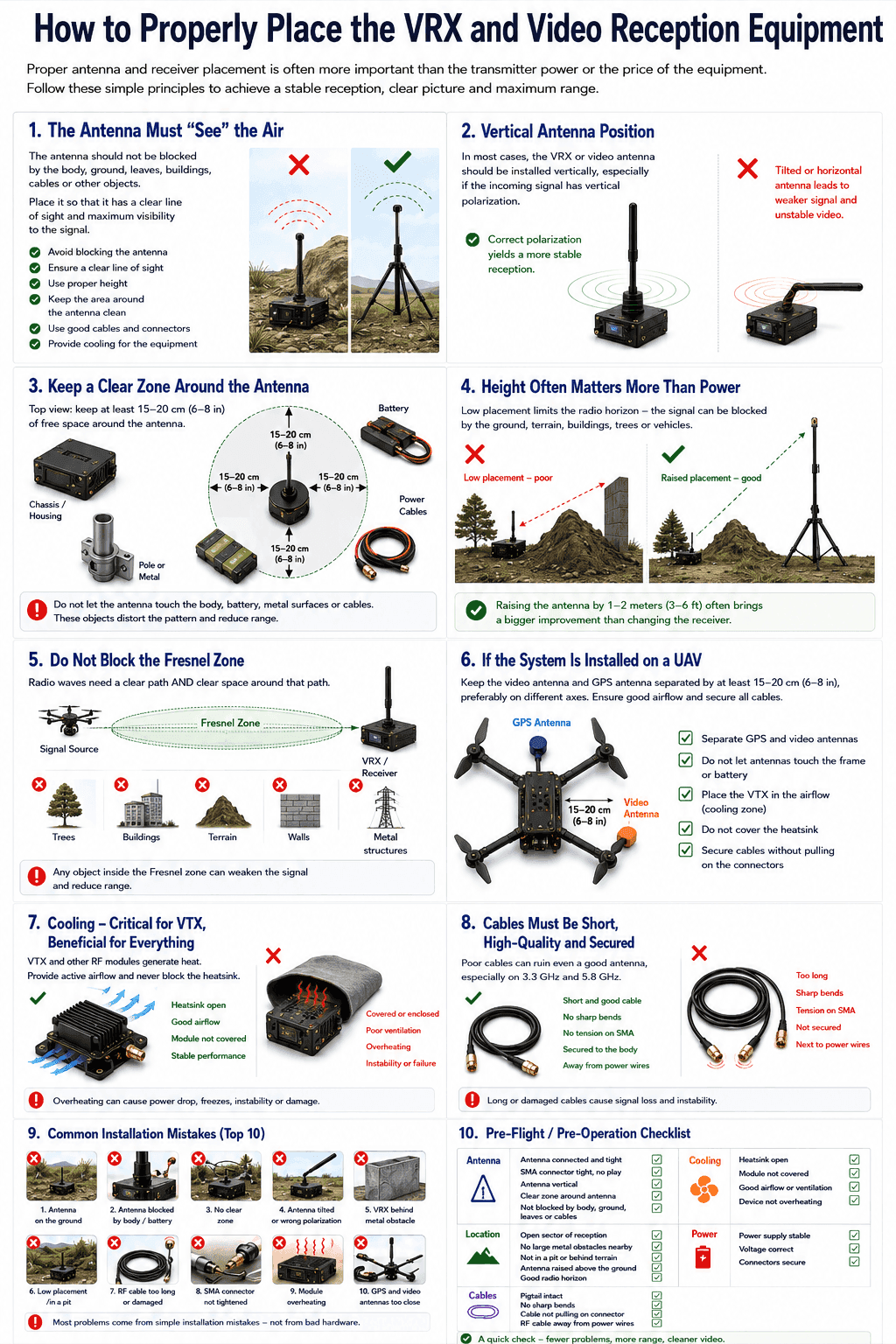
A weak FPV signal, noise and image dropouts usually come not from the receiver but from wrong antenna placement. Practical principles: a clear zone around the antenna, vertical polarization, height, the Fresnel zone, spacing from GPS on a UAV, and cooling.