Omnidirectional Antennas for FPV and Ground Stations
The most common question we get is this: "I installed a higher-gain antenna and the link got worse — why?" The answer almost never lies in the antenna itself, but in what people expected from it. An omnidirectional antenna solves a completely different problem than a directional one, and confusing the two costs you range and patience.
Let's break it down properly: what those 360° actually mean, where gain comes from, and when circular coverage is genuinely the right call.
What "360 degrees" really means
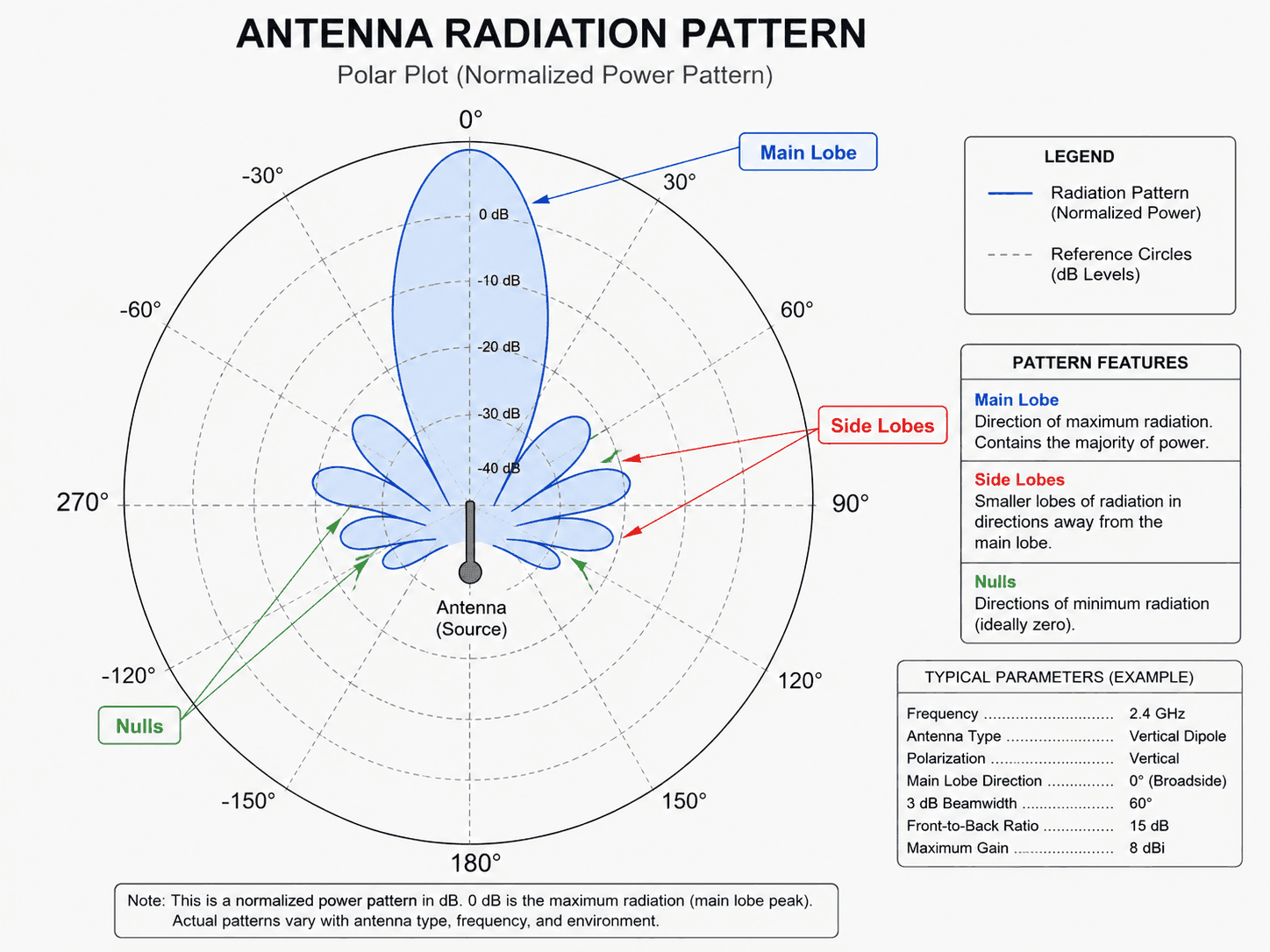
An omnidirectional antenna radiates evenly in a circle only in the horizontal plane. In the vertical plane it does nothing of the sort — there it has a fairly narrow lobe.
The simplest analogy is a doughnut lying around the antenna. Look from above and you see an even circle. Look from the side and you see a squashed ring with holes directly above and directly below the antenna.
Hence the key practical takeaway: there is a blind spot straight overhead. If your aircraft passes above you at close range, the signal can drop out exactly when it is physically closest. That is not a fault — it is the shape of the pattern.
Where gain comes from, and what you pay for it
An antenna has no built-in amplifier. Gain is redistribution: energy is taken from some directions and added to others.
For an omnidirectional antenna it works like this — the doughnut gets flattened. The more you flatten it, the more gain you get in the horizontal plane and the narrower the vertical lobe becomes.
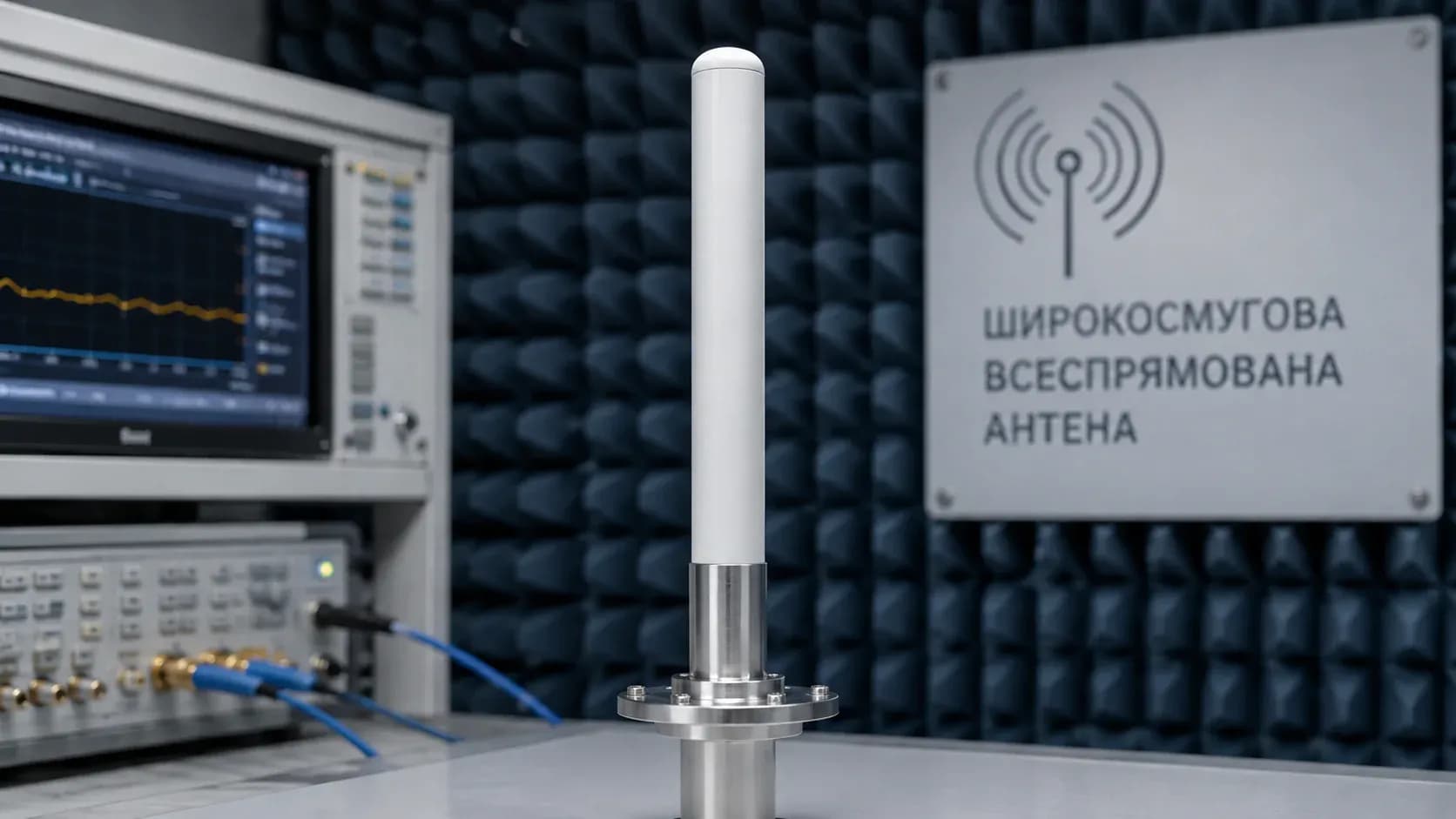
Our disc antenna, for example, reaches 8.8 dBi at 5800 MHz. That is a meaningful figure, but you pay for it with sensitivity to tilt and mounting height. A high-gain antenna mounted crooked will readily lose to a "weaker" one mounted straight.
A simple rule of thumb: +6 dB is roughly double the range, all else being equal. Which is why the 2-3 dB you gain at the antenna is easily lost again in poor cable or mismatched polarization.
When an omnidirectional antenna is the right choice
It wins wherever the direction is unknown or constantly changing:
- The aircraft manoeuvres around the operator. Manually tracking a fast target with a directional antenna is a job few people do consistently well.
- Several aircraft at once. One omni holds them all; a directional antenna only holds the one it is pointed at.
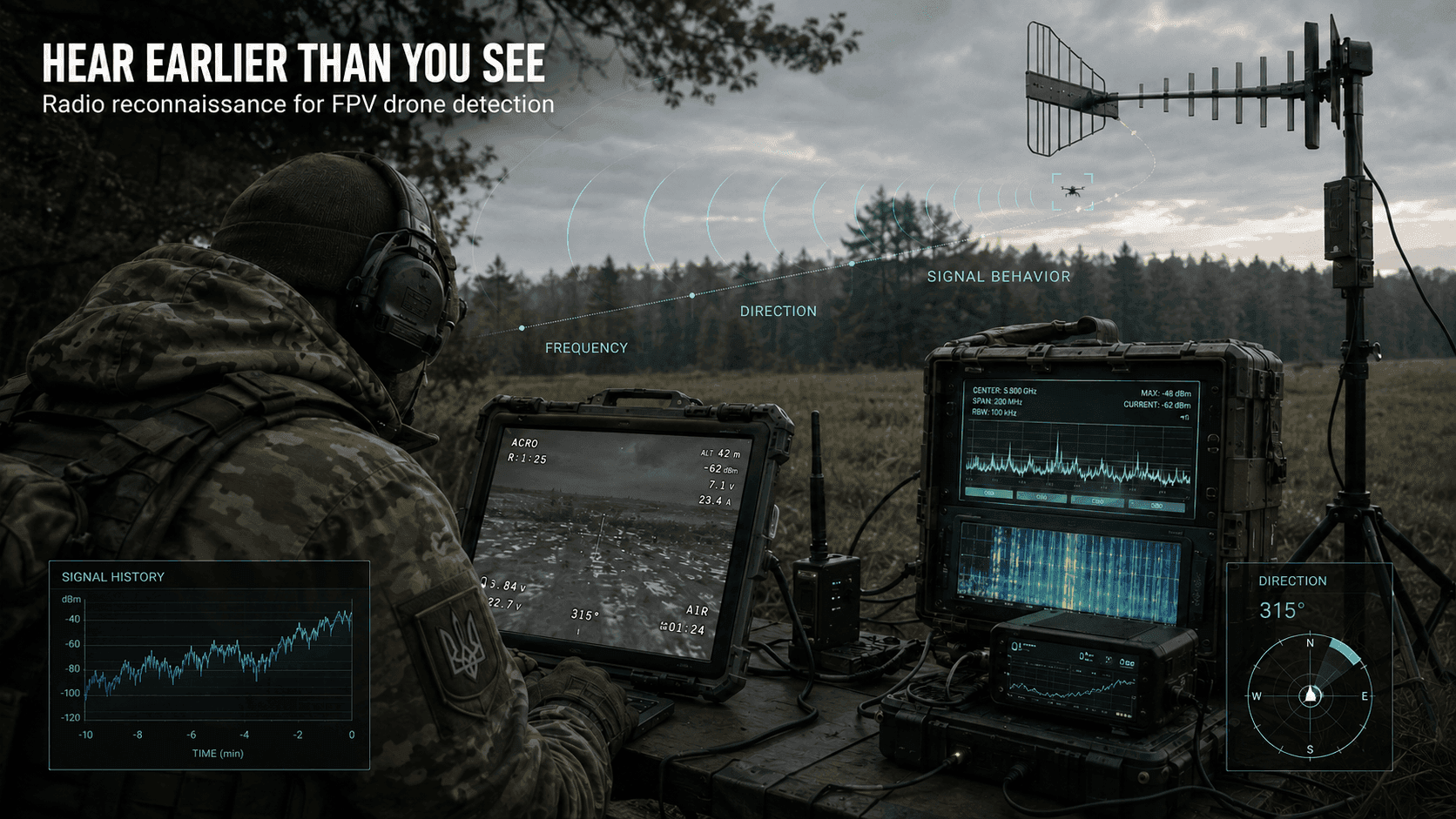
- Radio monitoring and spectrum scanning. When the task is to see what is out there at all, narrowing your view defeats the purpose.
- Relays and fixed comms nodes. Users approach from every direction.
- No way to aim. Masts, rooftops, shelters — anywhere nobody will be turning an antenna.
When a directional antenna is better
Honestly: in half of all cases the right answer is a directional antenna.
- You need maximum range in one direction.
- There is heavy interference off to the sides that you want to reject with geometry rather than filters.
- It is a fixed point-to-point link where the direction is known and stays put.
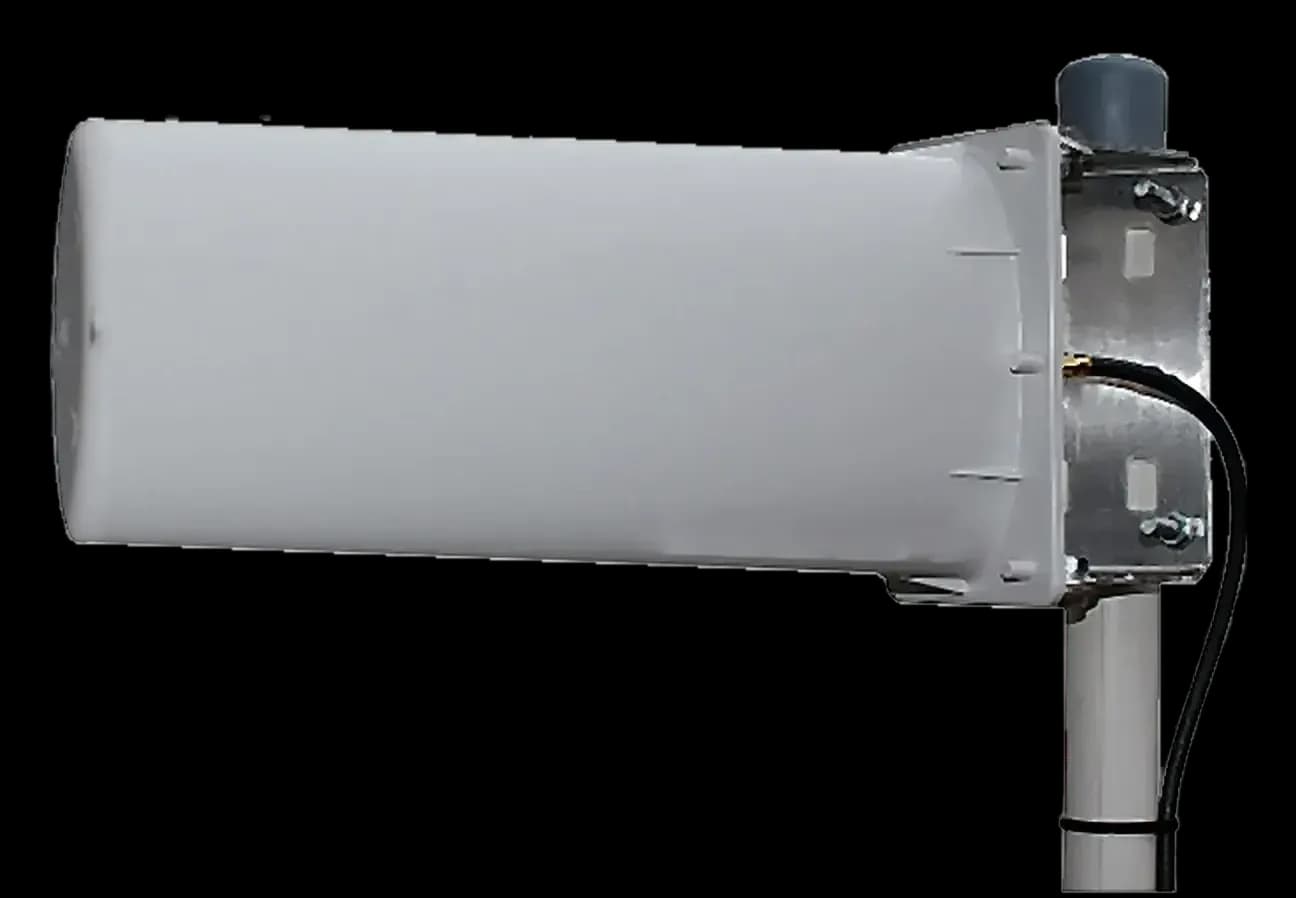
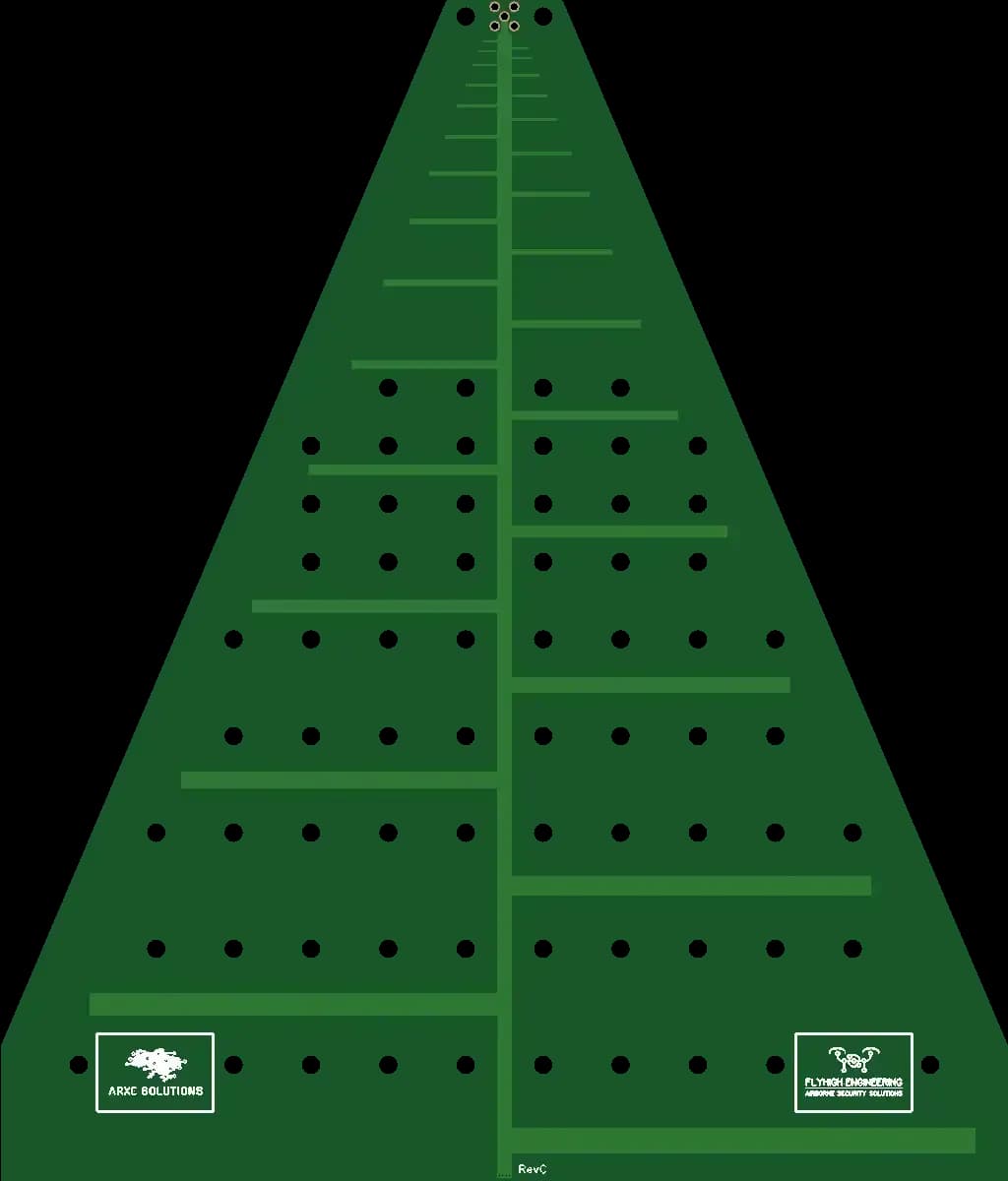
A directional antenna does more than add range — it also fails to hear what is behind it. In a congested RF environment that often matters more than gain itself. We covered that logic in detail in our piece on choosing between a narrowband and a log-periodic antenna.
The details that matter more than gain
This is where most of the loss happens — and usually unnoticed.
Polarization. If one end is linear and the other is circular, you give away roughly 3 dB for nothing. Rotating linear against linear by 90° costs far more than that. It is the cheapest and most common loss there is.
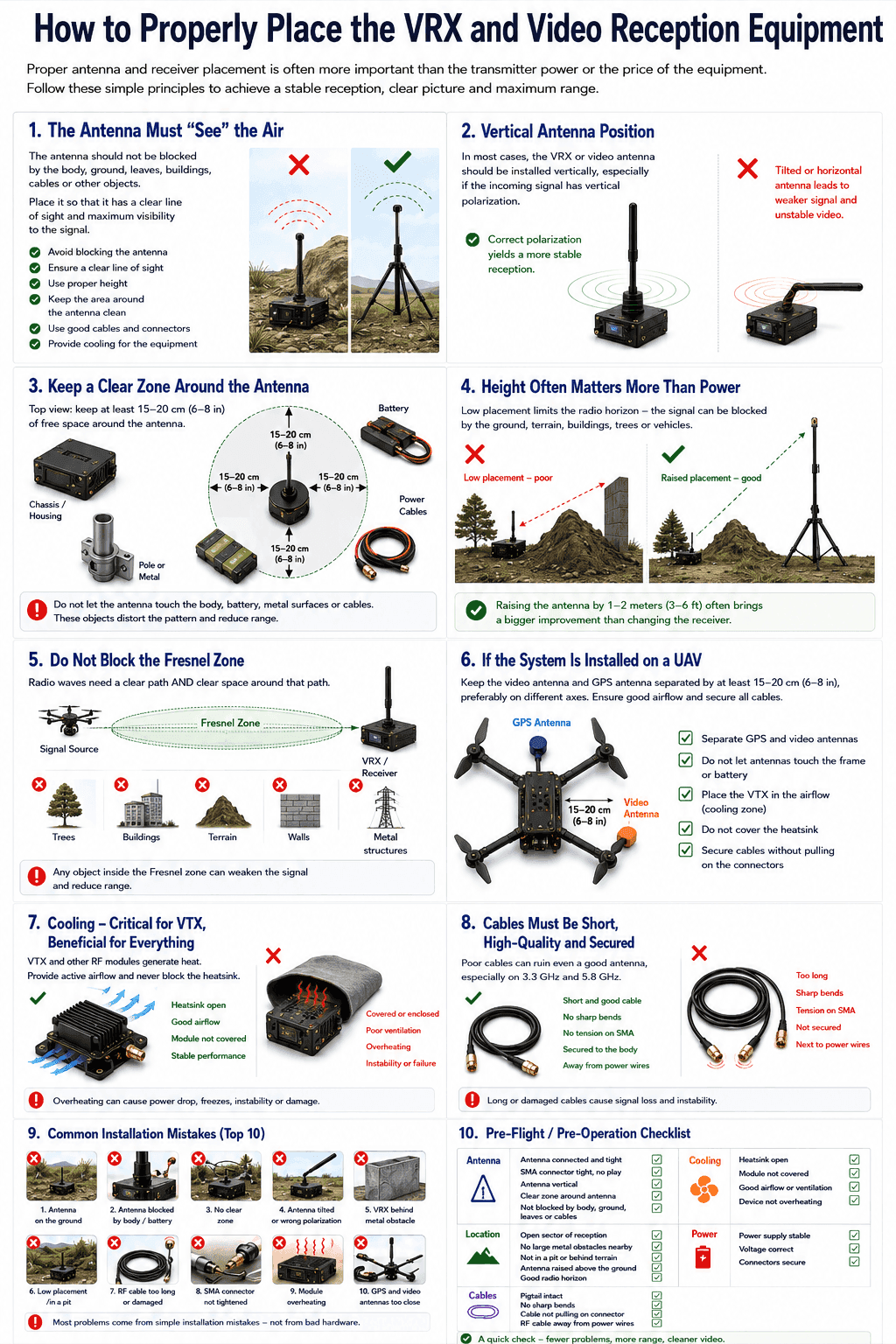
Height and a clear horizon. The doughnut radiates sideways. If the antenna sits behind a parapet, down in a dip, or behind a metal vehicle body, no amount of gain will compensate. Raising it by a metre often does more than replacing it.
Cable. At 5.8 GHz losses climb steeply. A few metres of cheap coax can eat all 8.8 dBi. A shorter, better feedline means real decibels, not marketing ones.
Connector. Our disc antenna uses RP-SMA Male, which is easy to confuse with ordinary SMA — the thread is identical, the centre contact is inverted. If you have not dealt with this before, we have a step-by-step guide on connecting an antenna via RP-SMA Male.
Antenna diversity. If you run two receivers, use two different antenna types and space them apart. Two identical antennas side by side duplicate both the strengths and the blind spots.
What we offer
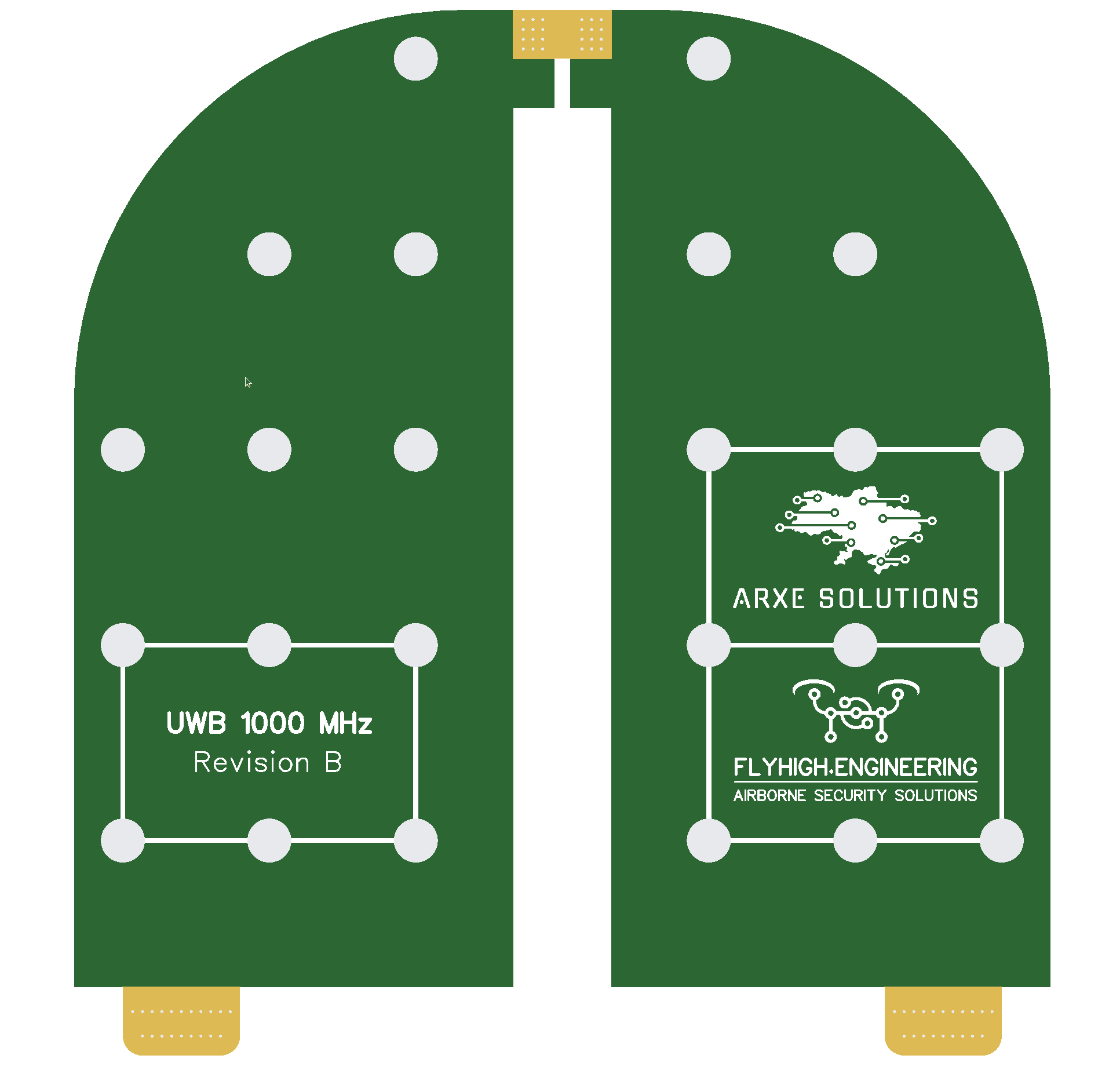
Broadband Omni Disc Antenna 1–8 GHz — 1500 UAH. Linear polarization, gain up to 8.8 dBi at 5800 MHz, 50 Ohm impedance, RP-SMA Male connector, input power up to 200 W. The 1–8 GHz range covers both 2.4 and 5.8 GHz with no retuning — convenient for ground stations, SDR work and spectrum monitoring.
If the above convinced you that your task is directional after all:
- Log-Periodic Antenna 530–6000 MHz — 2500 UAH
- Log-Periodic Antenna 300–6000 MHz — 5000 UAH, wider range at the low end
Wholesale discounts are available — get in touch and we will price it for your volume.
Choosing in 30 seconds
One question: do you know the direction to the other end, and does it stay constant?
- Known and constant → directional, for range and side-interference rejection.
- Unknown, multiple, or moving → omnidirectional.
And before swapping an antenna for a "stronger" one, check three things: polarization at both ends, mounting height, and cable length. Very often the problem is right there — and fixing it costs nothing.