Log-Periodic Antenna 530–6000 MHz: Choosing One for SDR and FPV
A log-periodic antenna (LPDA) solves one specific problem: cover a wide frequency range with no retuning while looking in one direction. For SDR monitoring and FPV that is often exactly what you want. Here is when it pays off, when it does not, and how to avoid throwing away its advantages at install time.
Why a wide band with no retuning
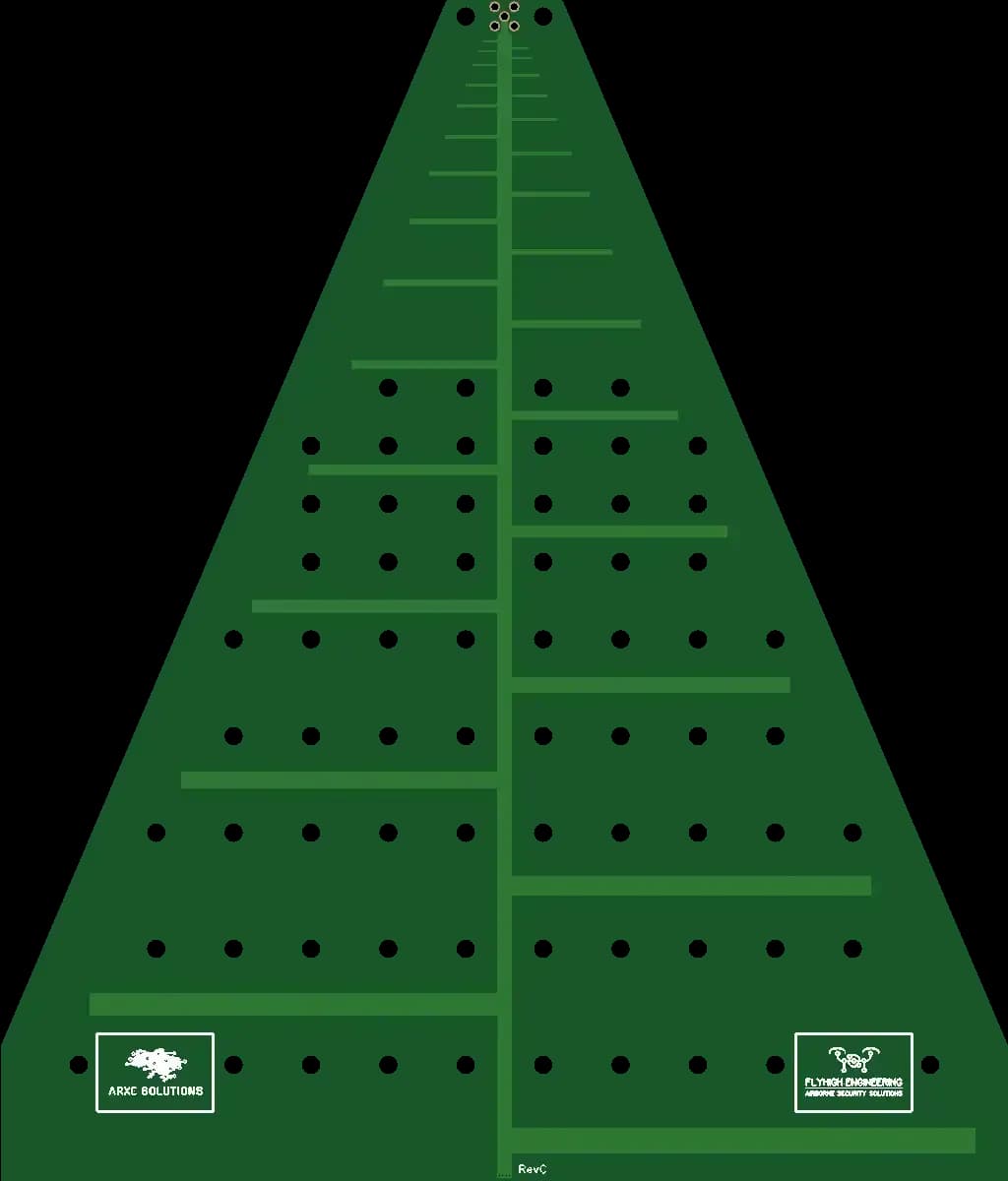
A narrowband antenna peaks at one frequency and falls off quickly outside it. A log-periodic is built differently: it is a set of dipoles of varying lengths, and at each frequency the section that resonates with the wavelength does the work. So the antenna behaves the same across the whole range — 530 to 6000 MHz — with no manual tuning at all.
For SDR that is convenient: one antenna covers 2.4 GHz, 5.8 GHz and the bands in between that matter for radio monitoring. No need to keep a fleet of narrowband antennas for each task.
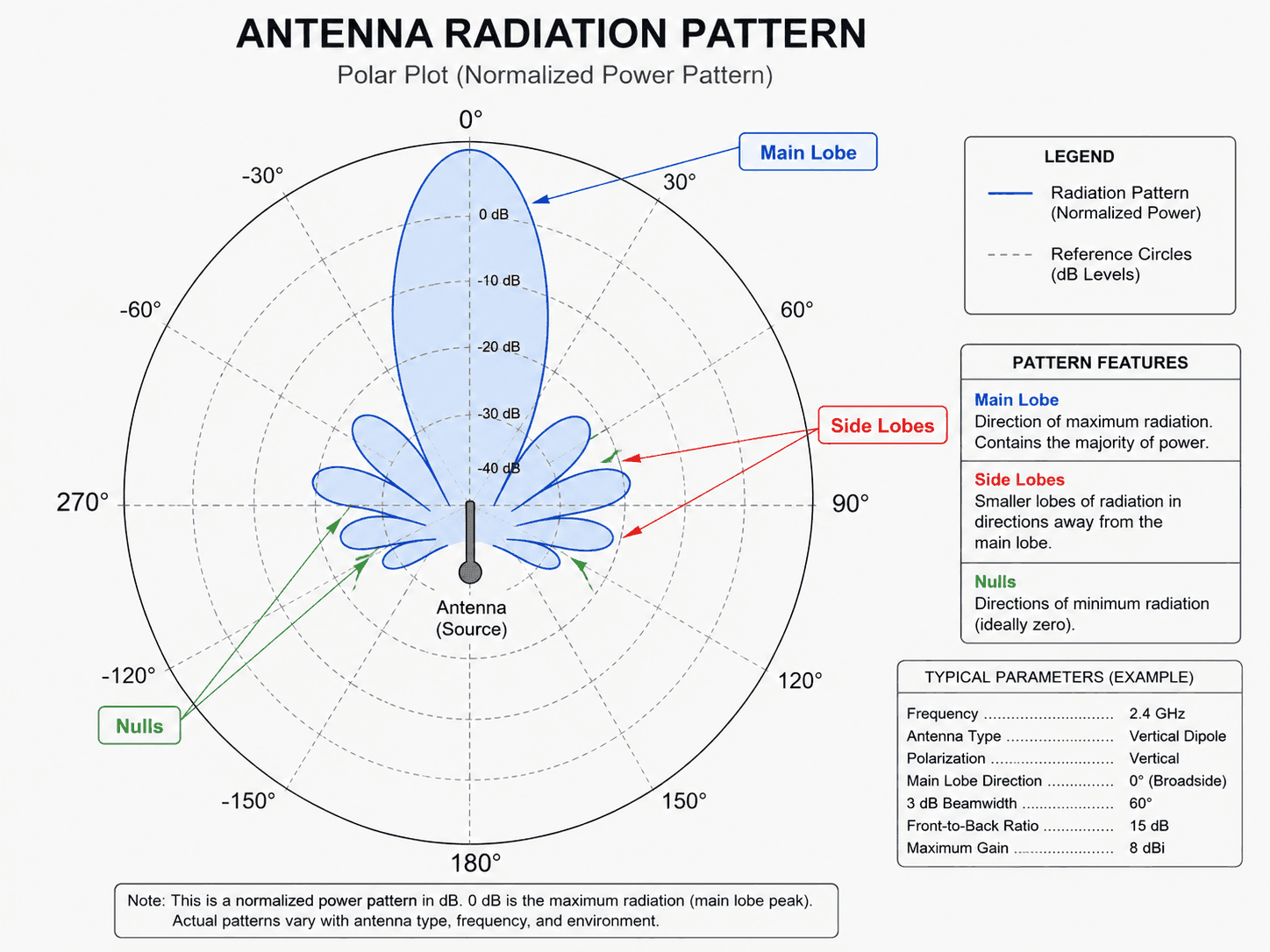
An important note on gain: an LPDA's gain is moderate but steady across the band — unlike a narrowband antenna, where it peaks at a single point. You can see the actual measured radiation pattern for this model in the measurement report — real data rather than a datasheet figure.
FPV: direction and polarization are what matter
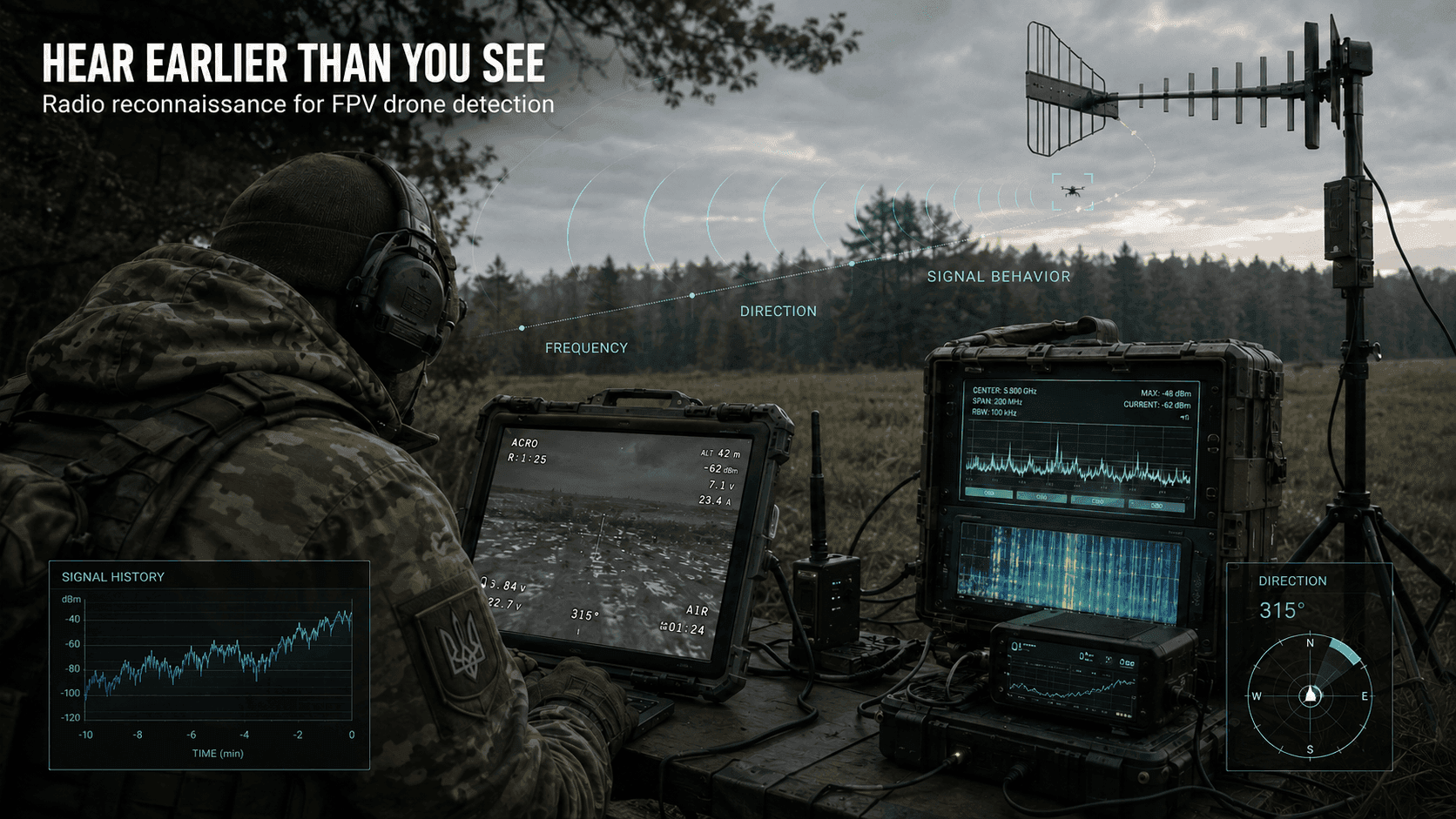
For FPV a directional antenna on the receiver wins range where you know where the aircraft is going: flying away from you, a ground station, a one-directional relay. Directionality gives you not only forward gain but also rejection of side interference — in a congested 5.8 GHz environment that often matters more than the decibels themselves.
But there is a condition that is easy to miss: polarization at the transmitter and receiver must match. A log-periodic is linear. If the aircraft uses circular polarization you lose about 3 dB straight away; if it is linear but rotated 90°, far more. Check the antenna's orientation before flying.
If the direction to the aircraft keeps changing, or there are several aircraft, a directional antenna loses. Then look at an omnidirectional antenna that radiates in a full circle.
SDR: what directionality gives you
For radio monitoring and telemetry a directional antenna helps in two ways. First, a higher signal-to-noise ratio in the direction you want — a weak signal reads more clearly. Second, that same rejection of interference from other directions: when there is a strong source nearby, a directional antenna simply does not hear it.
If you need the opposite — to survey the whole spectrum and not miss what is out there — a directional antenna is not the tool, and an omni is the better choice. We covered the choice between types separately in narrowband versus log-periodic.
Mounting: where most of the loss happens
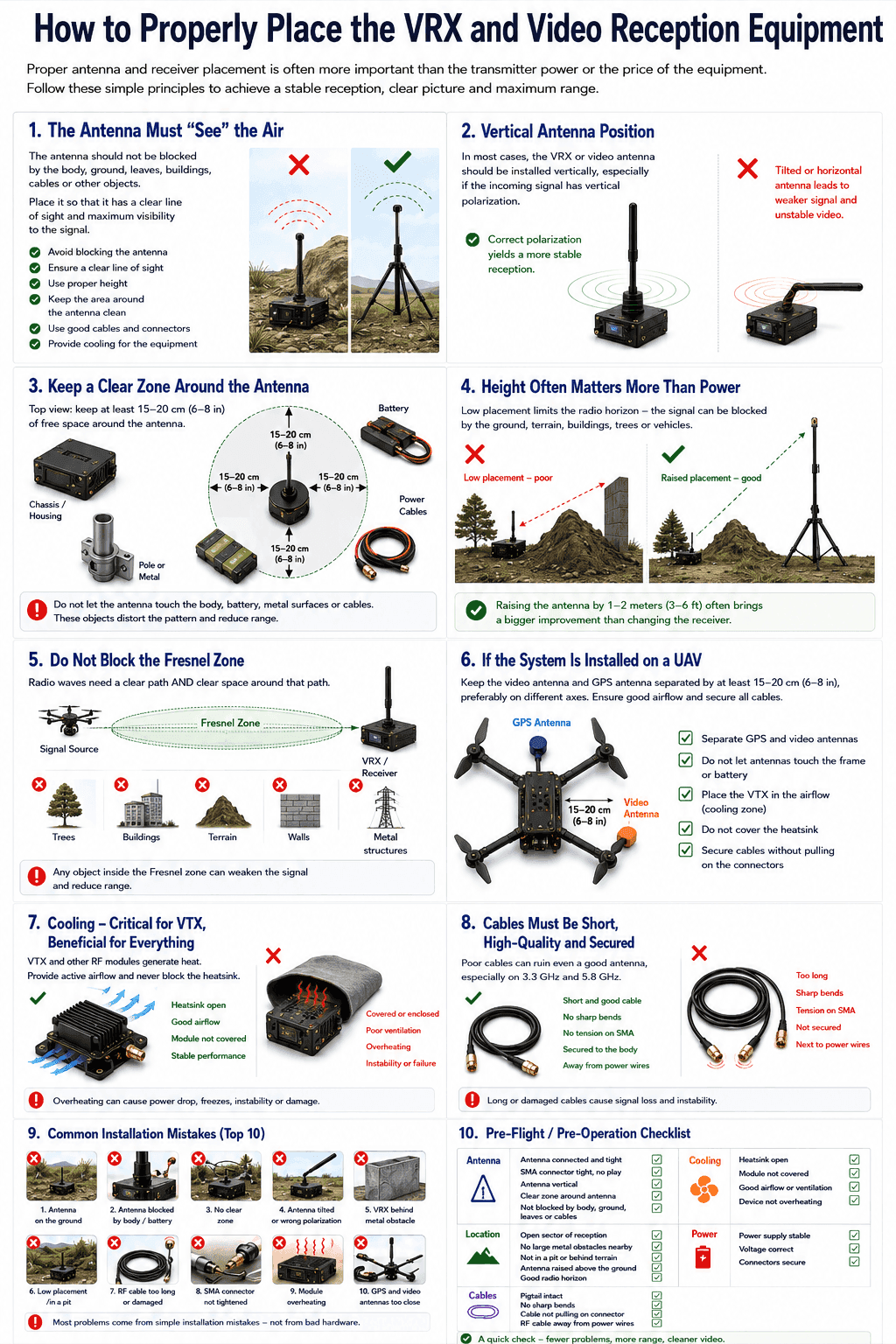
Even a good antenna performs poorly if it is mounted wrong.
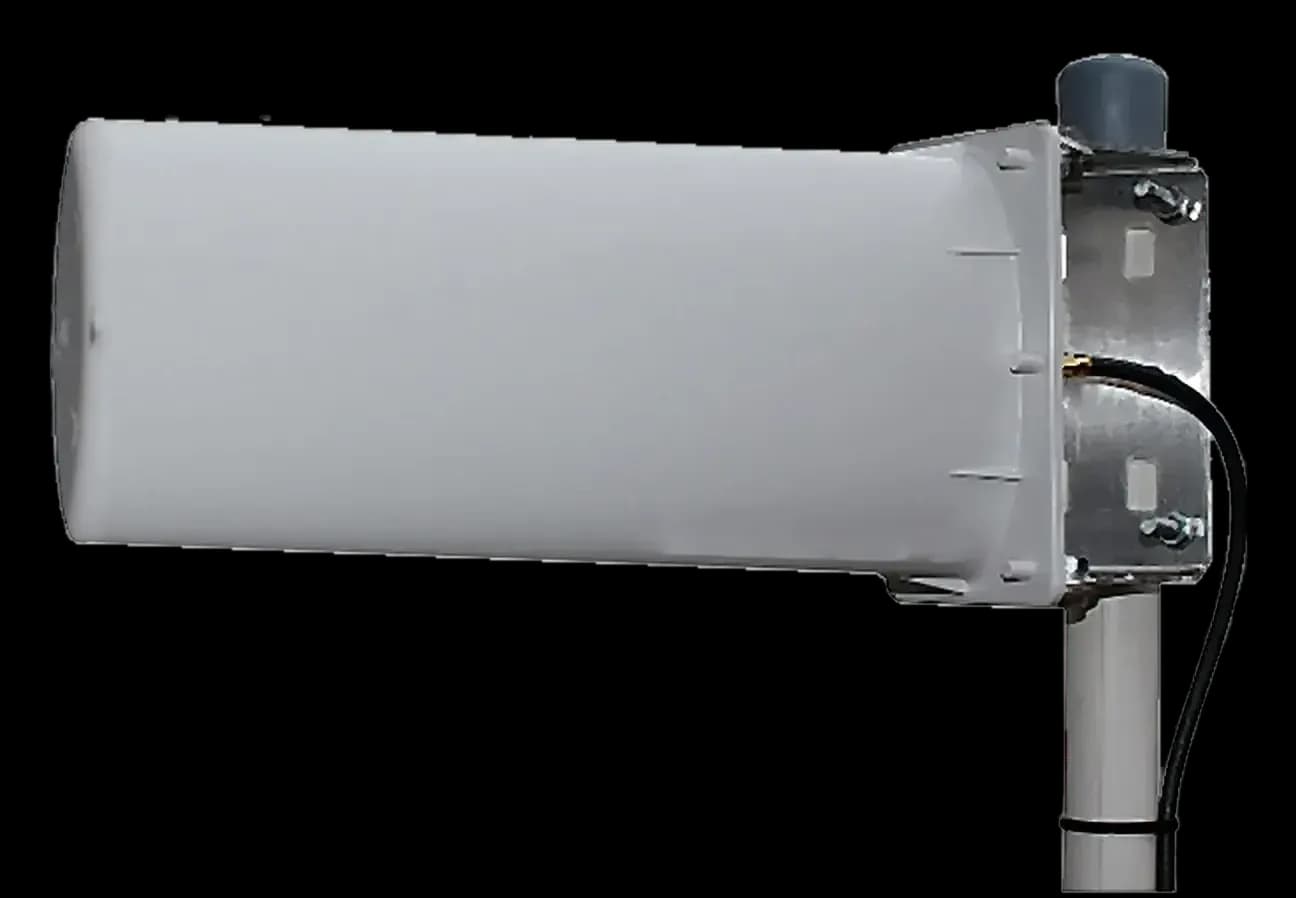
Orientation. A log-periodic looks forward in a narrow sector. Point the tip of the antenna at the signal source — even a small misalignment noticeably drops reception.
Height and line of sight. The fewer obstacles between the antenna and the other end, the better. Metal, walls or a parapet in the sector — no amount of gain compensates for that.
Cable. At 5.8 GHz cable losses climb steeply. A short, good feedline often gives more real decibels than swapping the antenna.
Connector. Make sure the connector type matches your equipment, and do not confuse RP-SMA with ordinary SMA — the thread is identical, the centre contact inverted. If you have not dealt with this, there is a step-by-step guide on connecting an antenna via RP-SMA.
How to check it works
The simplest objective figure is SWR (standing wave ratio). The closer to 1, the less power is reflected back. You can measure it with an antenna analyser or an SDR with the right software. Then check reception quality at several frequencies across the band in real conditions: an LPDA should hold steady across the whole span, with no dips at individual frequencies.
Frequently asked questions
How does a log-periodic differ from an ordinary directional antenna? By bandwidth. An ordinary directional antenna (a Yagi, say) is optimised for a narrow band, whereas a log-periodic holds its characteristics from 530 to 6000 MHz with no retuning.
Is it good for long distances? Yes, if the direction is known. Directionality gives both forward gain and protection from side interference — both help range.
What polarization does this antenna use? Linear. Make sure the polarization at the other end of the link matches, or you will lose signal.
Does it need tuning for a specific frequency? No. A log-periodic works across the whole band at once — there is nothing to adjust.
What to choose
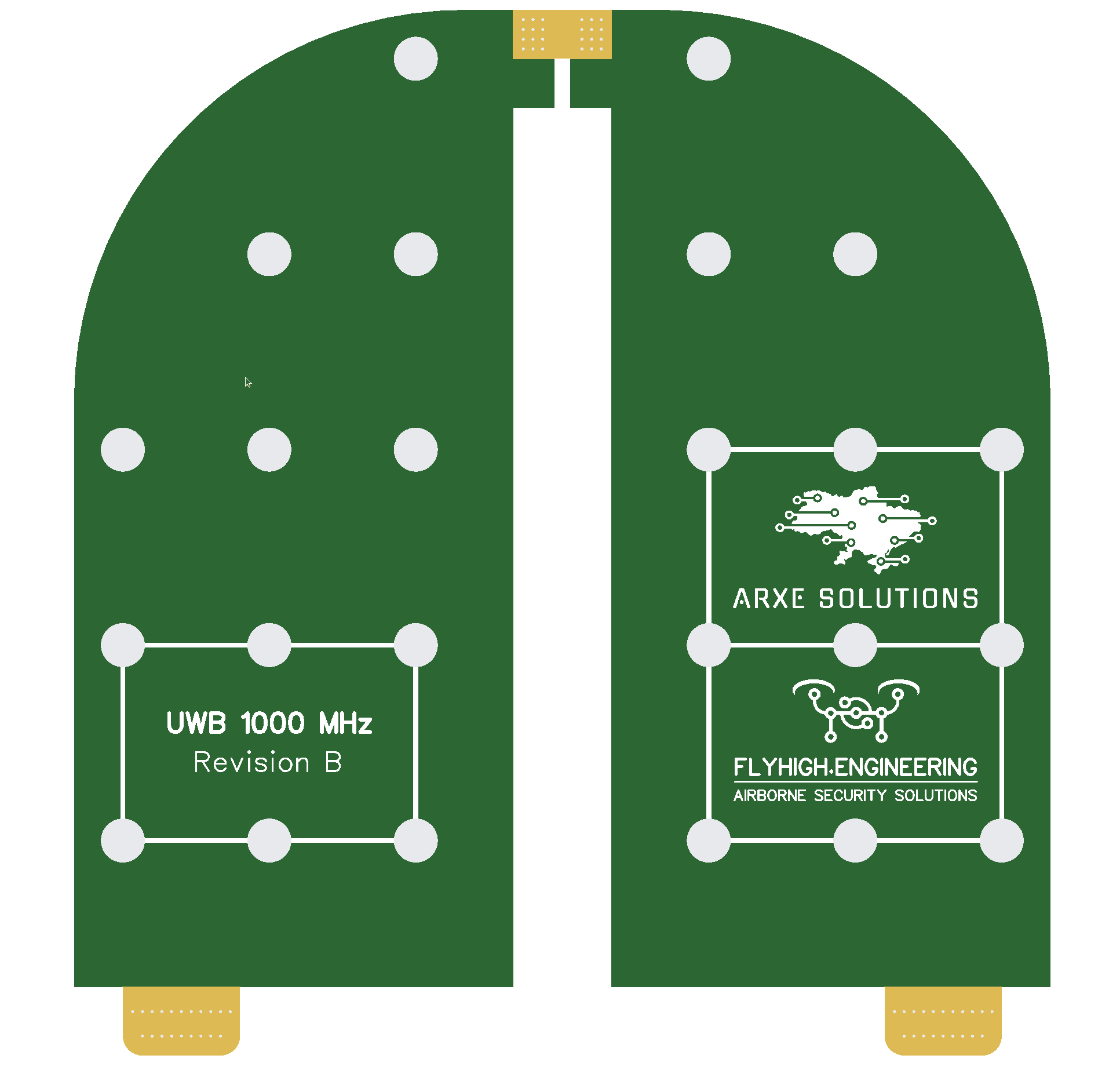
If you need a directional, wide-band antenna for SDR, FPV or telemetry, look at the 530–6000 MHz log-periodic antenna. It is a printed PCB antenna, 305×260 mm, directional reception, no retuning; the actual measured characteristics are in the report.
Wholesale discounts are available — get in touch and we will price it for your volume.