Bypassing Static IP: Ensuring Video Connectivity in Field Conditions with Dynamic WAN
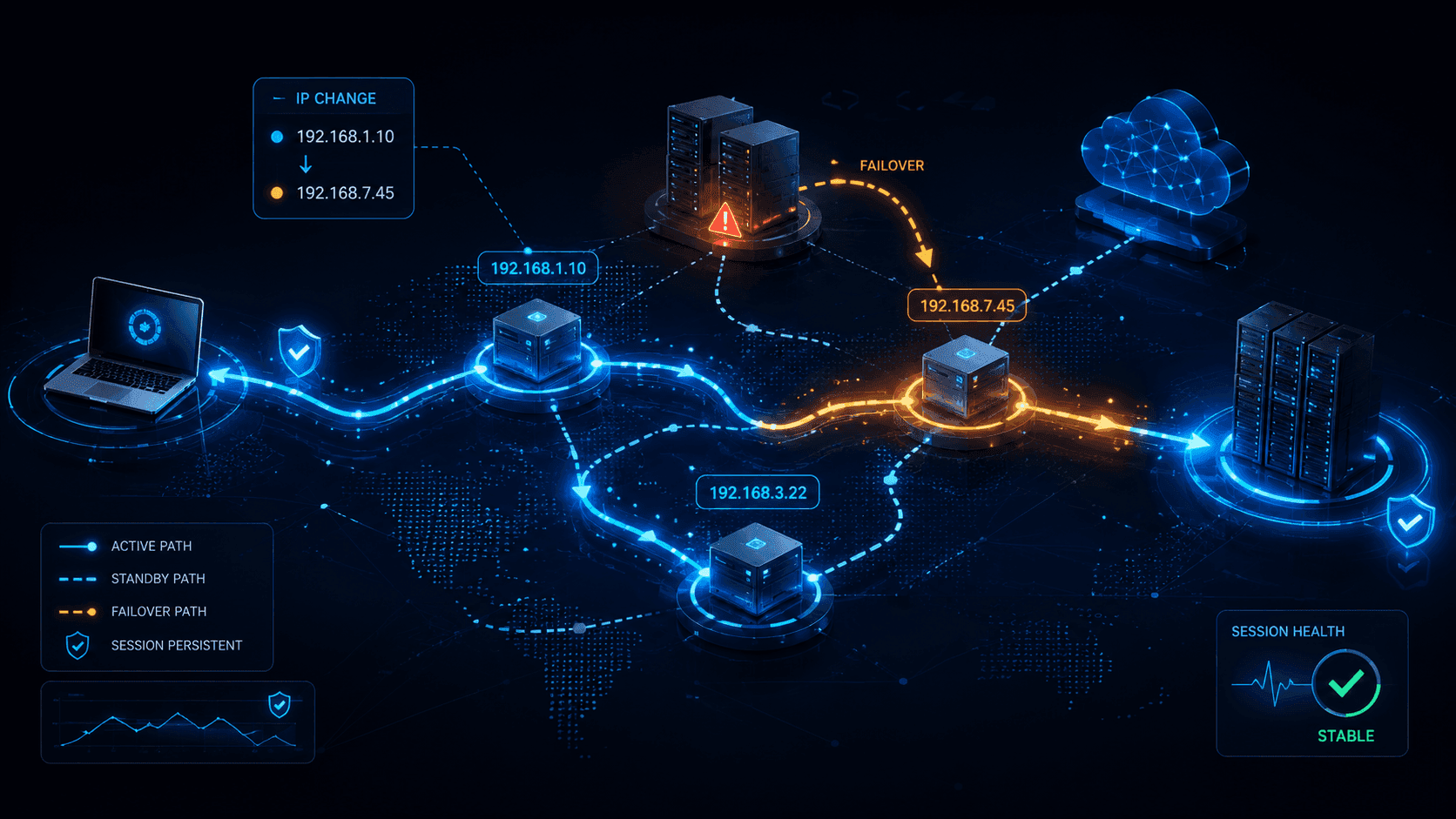
Dynamic IP addresses, naturally, create a whole host of headaches for remote monitoring: the external address can change at any moment. So here we need to think not so much about the static nature of the network overall, but deeper — in terms of the actual data transfer protocols.
Initially, we all tend to view an IP address as some kind of physical key to a network segment. But if you try setting up a home web server and already assume that your api.ipify.org will return the same result next time — well, that’s just madness. For field monitoring, especially with critical data or a constant video stream, this principle is a fundamental limitation we need to acknowledge.
This brings up two distinct questions worth separating. First, the visibility problem: how am I supposed to tell the outside world that my IP has changed? That’s already solved by scripts that periodically check their public IP and send out an alert. And second — more critical for video: how do you allow the video stream itself to pass through this change without manual intervention?
Trying to “patch” a changing external IP right at the router level to maintain a persistent VPN tunnel or open port often ends up looking comical and depends heavily on the specific CGNAT implementation, or even just the DHCP lease time. I think it’s better to shift the focus away from the address itself and onto protocols that inherently manage session state, regardless of what IP is currently assigned.
If we’re talking about reliable video connectivity in the field, I’d advise forgetting the idea of a “static IP” as a guarantee for the link — unless you can get that guarantee directly from your provider. We need methods that work above this network infrastructure layer.
From an equipment standpoint, when you need maximum control over the stream and minimum reliance on local networking, look at cameras that support secure RTMPS/RTSPS streaming — such as ARXE CAM. This lets you not just “punch through video,” but establish a clearly defined, protocol-based data stream — far more resilient to network fluctuations than standard HTTP viewing.
If your architecture requires access through your own infrastructure (for extra sensors or remote control, say), the choice lies between deploying a gateway based on VPN tunneling or using DDNS (Dynamic DNS). DDNS is a pretty straightforward option: it automatically updates the hostname record when the public IP changes, which is much simpler than writing a notification script. VPN tunneling, however, provides a more isolated and controlled channel than plain DDNS.
Sometimes you run into a scenario very similar to field-monitoring guides, where the emphasis is precisely on the lack of a guaranteed static IP. This only confirms it: the toolkit needs to be maximally adaptive.
For instance, if your main challenge isn’t network invisibility but simply remoteness, you can consider two paths. The first is an intermediary server (a jump box): you spin up a cloud VM (like AWS EC2 or a DigitalOcean droplet) with a guaranteed static IP, your field device connects to this “anchor,” and you relay the stream from there to the end observer. Sure, it adds cost, but it guarantees an entry point. The second vector is tunneling protocols like WireGuard or OpenVPN with automatic reconnection logic on the client side; this is less dependent on specific ports an intermediate router might block.
Personally, I always say: don’t forget the basics. If a system needs to run long-term, definitely check the equipment documentation for support of the required protocols (RTSP/ONVIF). It’s better to spend time correctly configuring a streaming feed with off-the-shelf hardware than writing some overly clever script to “fix” the network.
So, if you need connectivity where the IP address is a constantly changing variable, your next step shouldn’t be searching for a static IP, but selecting a data transfer protocol capable of self-recovering a session or operating through another layer of abstraction.